
- Key Takeaways
- Decoding Faith in Jewelry
- Your Story in Metal
- Beyond Beauty: Material Integrity
- The Artisan’s Touch
- A Legacy of Belief
- Begin Your Heirloom
- Conclusion
- Frequently Asked Questions
- What is custom religious jewelry?
- How do I design my own religious jewelry piece?
- Which metals are best for meaningful faith jewelry?
- Can custom religious jewelry be worn every day?
- How long does it take to create custom religious jewelry?
- Is custom religious jewelry suitable as an heirloom?
- How do I care for my custom religious jewelry?
Key Takeaways
- Custom religious jewelry turns commonly known symbols like crosses, stars, crescents, and lotuses into statements of personal belief, identity, and tradition. Selecting symbols that genuinely represent personal beliefs allows the piece to feel significant and sincere.
- Engravings, gemstones and meaningful shapes personalize faith-based jewelry into a keepsake of soul-affirming moments. Add names, dates, scriptures or phrases that are meaningful to you and pair them with stones that represent virtues, blessings or birth months.
- Whether a pendant, ring, or bracelet, the form of a piece affects not only its message but its comfort as well. Choose designs and dimensions that fit everyday use or special events so the jewelry is both useful and meaningful.
- Materials like gold, silver, platinum, or other metals influence longevity, aesthetics, and how well intricate religious details are rendered. Choose robust, enduring metals and finishes that preserve fine detail symbols and promote heirloom quality.
- With ethical sourcing and craftsmanship standards, faith-inspired jewelry honors people and the planet as much as the spirit. Inquire about conflict-free materials, transparent supply chains, and quality checks so that every piece is ethical and is designed to last.
- Working with master jewelers, employing timeless techniques and high-tech methods, we convert those deeply held beliefs into exacting, individualistic creations. Get some ideas, stories, and references ready before you engage in a project to direct the design process and craft a legacy piece.
Custom religious jewelry is jewelry designed to reflect a person’s faith in a way that suits their personal style, belief system and lifestyle. Often, they turn to custom pieces to commemorate milestone moments, such as baptism, their wedding, or a significant life transition. Others incorporate names, dates or brief verses, while some select symbols across religions or blend traditional icons with contemporary forms. Makers now utilize an array of different metals, stones and engraving techniques, so minimalistic pendants as well as more elaborate designs are both popular. To assist you in sifting through all these options, the next few parts categorize styles, materials, design inspiration and guidance for maintenance and wear.
Decoding Faith in Jewelry
Faith Jewelry is the tangible manifestation of faith in everyday life. A tiny pendant, ring, or bracelet can serve as a subtle memento of your faith, who you are, and what you stand for. Millions of us wear them every day to hold sacred words or symbols close to our heart, not just for fashion but for solace, strength, and identity. Through traditions, bespoke designs fortify this connection by aligning with particular narratives, rituals, and individual paths.
1. The Cross
For centuries, Christian jewelry has been donned as a symbol of faith, devotion, and spiritual identity. The cross is the main symbol here, as it points to the sacrificial death and resurrection of Jesus Christ and carries both loss and hope and new life within it. To some, they are a symbol of bravery in pain. To others, they are a guarantee that life and love win.
Styles range for Christian backgrounds. A simple Latin cross works well for Protestant contexts, while a crucifix depicting the body of Christ is more common in Catholic pieces. An Orthodox cross can have additional crossbars, and a Coptic cross can have bold geometric lines. Every form can signify a unique culture or individual perspective of belief.
Custom crosses can have engraving on the back with a date, verse, or name, transforming the universal into a representation of a baptism, wedding, or other pivotal moment. Materials matter too: gold often hints at value and royalty, echoing the “King of Kings,” while sterling silver can stand for purity, light, and truth. By adding a tiny gemstone, perhaps a birthstone or a clear stone for “hope,” you can tie the design back to an individual or season of life. Over time, a preferred cross style tends to follow an individual’s faith journey, transitioning from loud and elaborate to understated and subtle, or vice versa.
2. The Star
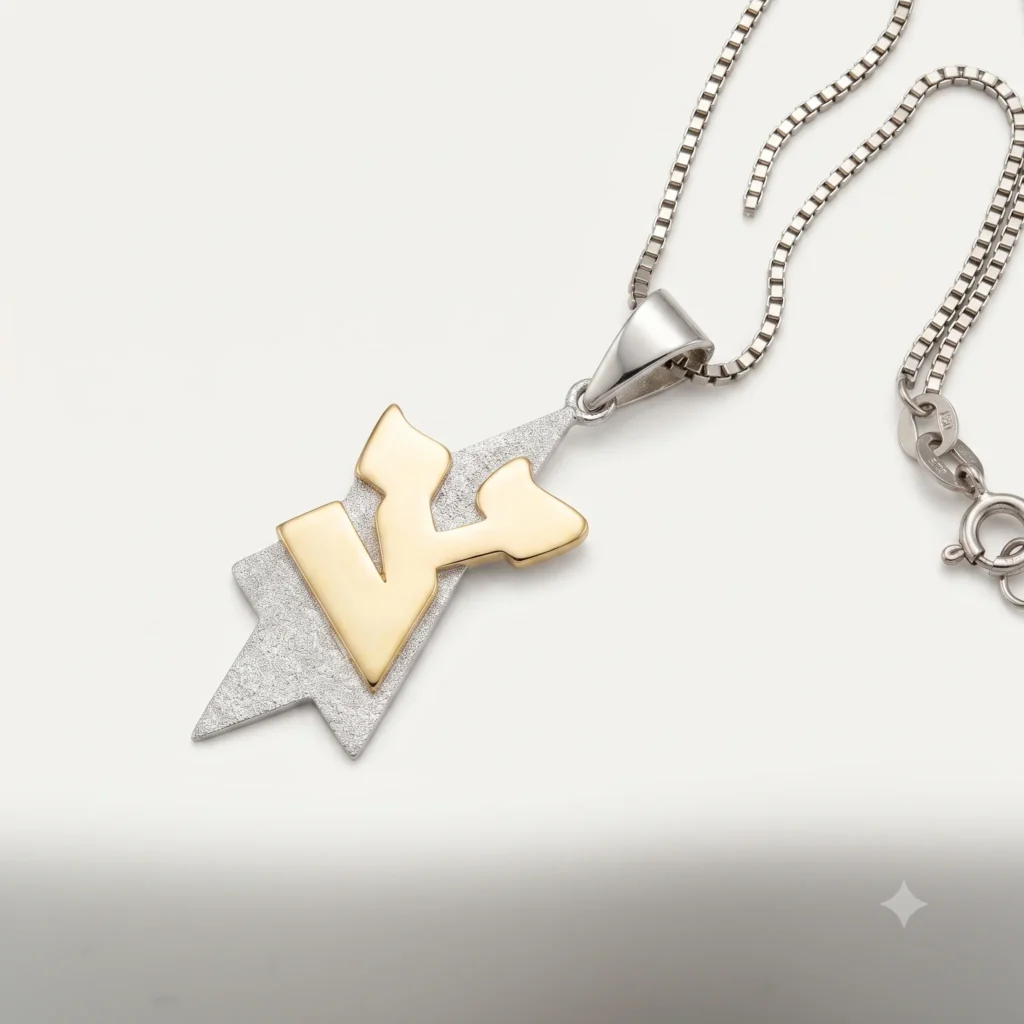
In Jewish tradition, the Star of David is an obvious, recognizable emblem of connection and community. It frequently represents divine protection and the connection between God and the Jewish people. Countless individuals don it every day as a constant reminder of that link.
Custom star pieces can celebrate a bar or bat mitzvah, a wedding, or the birth of a child. Engraving a Hebrew name or date on the reverse side converts a simple pendant into a family heirloom. Metal and finish shape how the symbol feels. Solid gold may suit formal or heirloom pieces, while brushed silver or white gold can give a modest, modern tone that still respects its depth.
3. The Crescent
The crescent, sometimes with a star, is an icon associated with Islam in various cultures and interpreted by some as a symbol of guidance, renewal, and faith illuminating the darkness. In bespoke jewelry, its shape requires attention so it remains elegant and understated, in keeping with religious and cultural sentiments.
They could utilize sleek, minimal lines with no additional ornamentation for a discreet aesthetic or feature faint engraved calligraphy of a name or brief message on the reverse, where only the wearer is aware of its presence. Tiny stones can be added to the point of the crescent or next to a star, but most like them in clear stones or bare metal to keep the attention on the symbol, not on opulence. A little fine craftsmanship goes a long way here because the slim curve of the crescent needs to appear even, harmonious, and gentle rather than jagged or cumbersome.
4. The Lotus
The lotus represents a lot in Hinduism and Buddhism. It is a symbol of purity and awakening, of transcending struggle. A lotus pendant may represent emerging from adversity or the desire for zen in everyday life.
Jewelry designers translate lotuses into rings, pendants, earrings, or bracelet charms, occasionally with openwork petals and occasionally a solid silhouette. Pair the lotus with a birthstone or a stone associated with a virtue. Amethyst, for example, is known to promote calm focus and adds an additional symbolic edge. They’ll select a lotus style that corresponds to a stage in their personal development, like healing, new learnings, or a new beginning in work or family life.
5. Other Symbols
Other symbols show up in bespoke Faith wear. The Om sign in Hinduism references divine vibration and the universe. The Hamsa hand, employed in various cultures, is associated with blessing and protection. In Christianity, the fish (Ichthys), the dove, and even a tiny mustard seed set in glass summon early believers, peace, and the strength of a small but true faith.
Custom work leaves room for lesser-known or local symbols, which can aid those whose paths do not fit a single dominant label. Others decide to mix symbols, like a cross with a little dove or a Hamsa with a little star to represent more than one piece of their narrative or heritage.
Designers frequently walk the line between meaning and looks by beginning with the main symbol, then choosing one or two subtle accents, such as a brief verse, a single stone, or a bi-metal combination, so the item remains concise and wearable. We often have customers talk about using this type of jewelry to commemorate life milestones such as baptisms, weddings, or new positions, or as gifts that bring comfort and a feeling of being seen. Some reference it as a gentle method to share their faith with the world.
Your Story in Metal
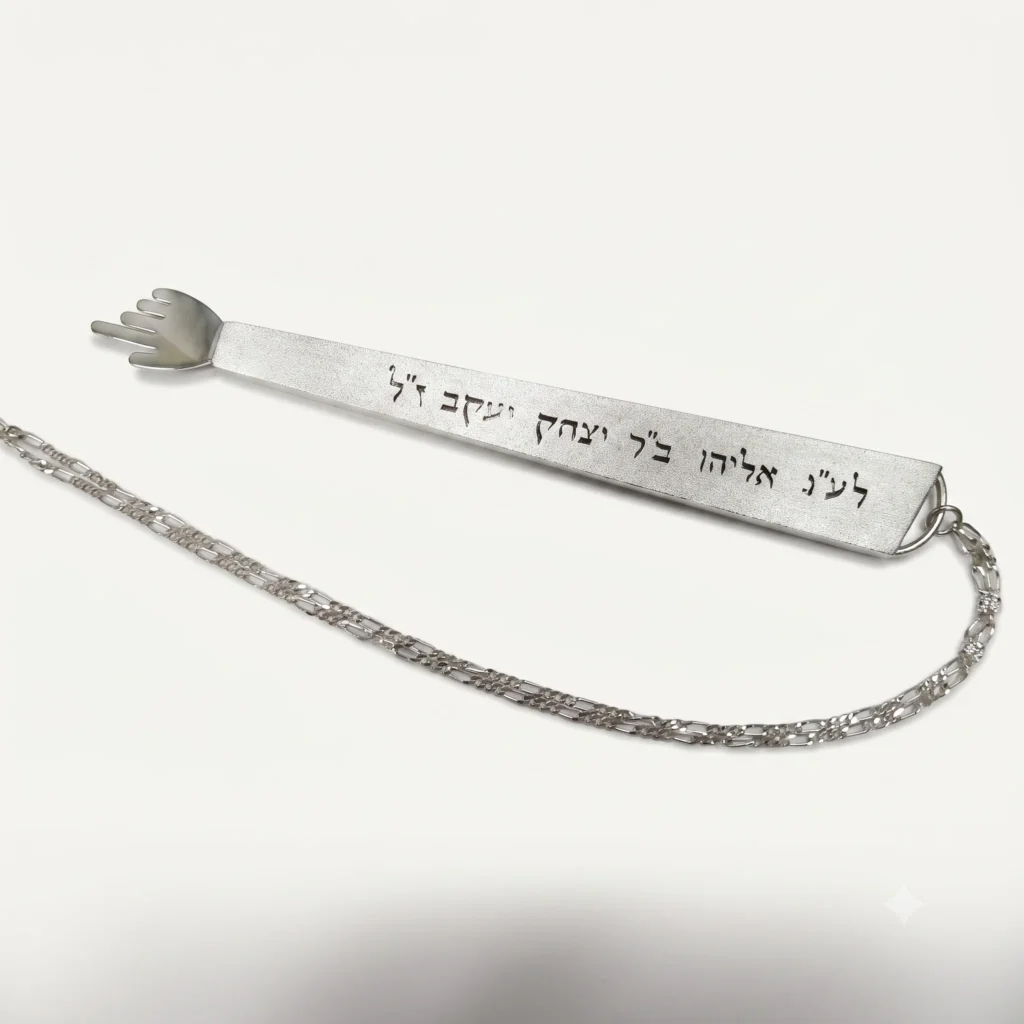
Religious jewelry custom acts like a silent journal of your soul. They’ve come to discover that their story and faith show up in the pieces they wear, transforming metal and stone into a genuine expression of self. Just the right blend of metal, gemstones and design can turn a piece from mere adornment to a constant reminder of your faith, your values and those pivotal moments that defined them.
Integrating your personal narrative into the design allows the piece to transcend “looking pretty.” It can commemorate a baptism, a wedding, an illness, a relocation, or the birth of a child. Many wear jewels as a serene lodestar during hectic days, a quotidian memento of faith that provides solace and reassurance when life seems overwhelming.
An easy beginning is to jot down a few of the major events, people, or places that transformed you. Inscribe dates, mantras, or verses that carried you through tough seasons. These notes can inform decisions on metal, symbols, stones, and layout, so the finished piece tells your journey, not a fad.
Engravings
Engraving makes a communal symbol yours. Little ones’ names, your partner’s, a mentor or spiritual guides can all sit on the back of a pendant or inside of a ring. For some, dates for conversions, graduations, or memorials allow you to carry those turning points each day, while for others, short scriptures or sacred lines help you stay focused on your faith and values at work, on travel, or while studying.
On the technical side, jewelers employ tools like laser engraving, hand engraving, or machine-assisted cutting. Hard metals like stainless steel or titanium manage very fine, sharp lines. Softer alternatives, such as gold or silver, complement deep cuts with additional warmth and personality. What counts is sharp and deep, so they remain legible and powerful through many years of abrasion.
Meaningful phrases or prayers can guide the engraving content:
- A bible verse or line of scripture that sustained you through a crisis.
- A mantra for life, such as a morning or bedtime prayer.
- Something from a hymn, chant, or spiritual song connects you to your tradition.
- A family motto or simple value statement, like “walk in truth” or “choose mercy.
- A word of the original sacred language (e.g. Hebrew, Arabic, Sanskrit) that you feel connected to.
Gemstones
Gemstones can introduce silent layers of significance. Perhaps a birthstone commemorates a child or a lost loved one, while another represents qualities like wisdom, bravery, or tranquility. Eventually, folks start to associate these colors with blessings or prayers answered in their own narrative.
Both color and tradition. Certain stone colors correspond with universal symbolism found in multiple religions, while others derive from unique doctrine. You may select stones that resonate with your spiritual journey, your tribe’s traditions, or the vibe you wish the piece to emanate, like serenity or power.
A few examples appear below:
| Gemstone | Common Color(s) | Possible Spiritual Meaning* |
|---|---|---|
| Amethyst | Purple | Clarity, sobriety, spiritual focus |
| Garnet | Deep red | Protection, perseverance, covenant love |
| Sapphire | Blue | Wisdom, truth, divine favor |
| Emerald | Green | Renewal, hope, growth |
| Ruby | Red | Passion, sacrifice, steadfast love |
| Pearl | White/cream | Purity, patience, hidden strength |
*Meanings vary by culture and faith tradition.
Stone layout counts. A main symbol like a cross, star, or lotus can sit in the center, with small stones encircling it like a halo or trail. A row of three stones may signify past, present, and future, whereas twelve little stones might tip your hat to the tribes, apostles, or zodiac-type months, according to your upbringing.
Form
Form dictates how a piece drapes on the body and how its statement reads. A thin band can serve as a subtle prompt you catch at the keyboard or in traffic, while a chunky necklace provides a more overt display of faith and selfhood. Bracelets capture this midpoint, which many find grounding when praying or reflecting.
Distinct shapes are suited to distinct purposes. A pendant, perhaps, for layered daily wear, nestled against the breast beneath your t-shirt. A ring can represent wedding vows or a lifetime commitment to a path in life, such as marriage or a spiritual calling. A bracelet, particularly with petite charms, can record distinct milestones across years, like beads on a narrative thread.
Everyday wear demands soft edges, low profiles, and balanced weight so the piece doesn’t catch on clothes or feel weighty after hours. Special-occasion pieces can be more detailed, taller, or more symbolic because they don’t have to sit under gloves or fit office dress codes.
Scale and symmetry keep it all legible and serene. Your hero emblem needs to be instantly readable, with stones, inscriptions and side motifs scaled to complement, not contest. Thoughtful, balanced design keeps the jewelry not only beautiful but practical, so it can continue to serve as a tangible symbol of your faith and journey for years to come.
Beyond Beauty: Material Integrity
In custom religious jewelry, material integrity means that the piece is crafted from premium, safe, and authentic materials, which will endure through daily wear and will still hold significance years, even decades, from now. A lot of us want these to be heirlooms, not trendy options.
Precious Metals
- Gold (14K–18K) . . Solid 18K gold is a strong indicator of jewelry committed to material integrity, as it retains its color and resists wear much better than plating. It’s great for crucifixes, saint or scripture pendants because it’s soft enough for fine detail but strong when alloyed. The downside is price and risk of scratching if karat is too high and you’re living a hectic life. Warm gold tones tend to flatter medium to deep skin tones, but it’s a guideline, not a rule.
- Silver provides a radiant, tranquil appearance that numerous individuals associate with modesty and plainness. It complements crisp writing, like delicate stars, crescents or thin bands with short passages. Sterling silver is durable, but it can tarnish, so it requires periodic wiping and dry storage. It goes great with cooler skin tones and less-high maintenance wearers who don’t mind a quick clean now and then.
- Platinum is dense, hypoallergenic, and holds little stones in place really well, so it’s strong for intricate icons, micro-pavé halos, or tiny script. It barely abrades at all, so it’s excellent if you intend to hand the piece down to kids and grandchildren. Its neutral gray-white tone works across most skin tones and for people who want one heavy-hitting piece they can wear every day.
- Alternative metals (titanium, stainless steel, tungsten). These metals tend to be more wallet-friendly and incredibly durable, suiting active lifestyles or those who work with their hands. They’re tougher to carve with fine detail, so some holy marks might appear more crude. For certain purchasers, utilizing fewer rare metals aligns with a humble, low-footprint mentality.
Ethical Sourcing
Ethics in jewelry goes well beyond the last polish. Things like fair labor practices, no conflict minerals, and being gentle on land and water are important. When a maker can demonstrate the origin of their gold, silver, or gemstones, and which refiner or mine, that transparency bolsters material integrity and reduces the possibility of counterfeit or unsafe alloys. Many people request recycled metals or certified conflict-free stones these days, because wearing jewelry with integrity is one way to wear your values and your commitment to sustainability. Transparent supply chain data helps safeguard mining communities too, as ethical procurement can translate to higher wages, safer work environments, and reduced harm to nearby ecosystems.
Lasting Quality
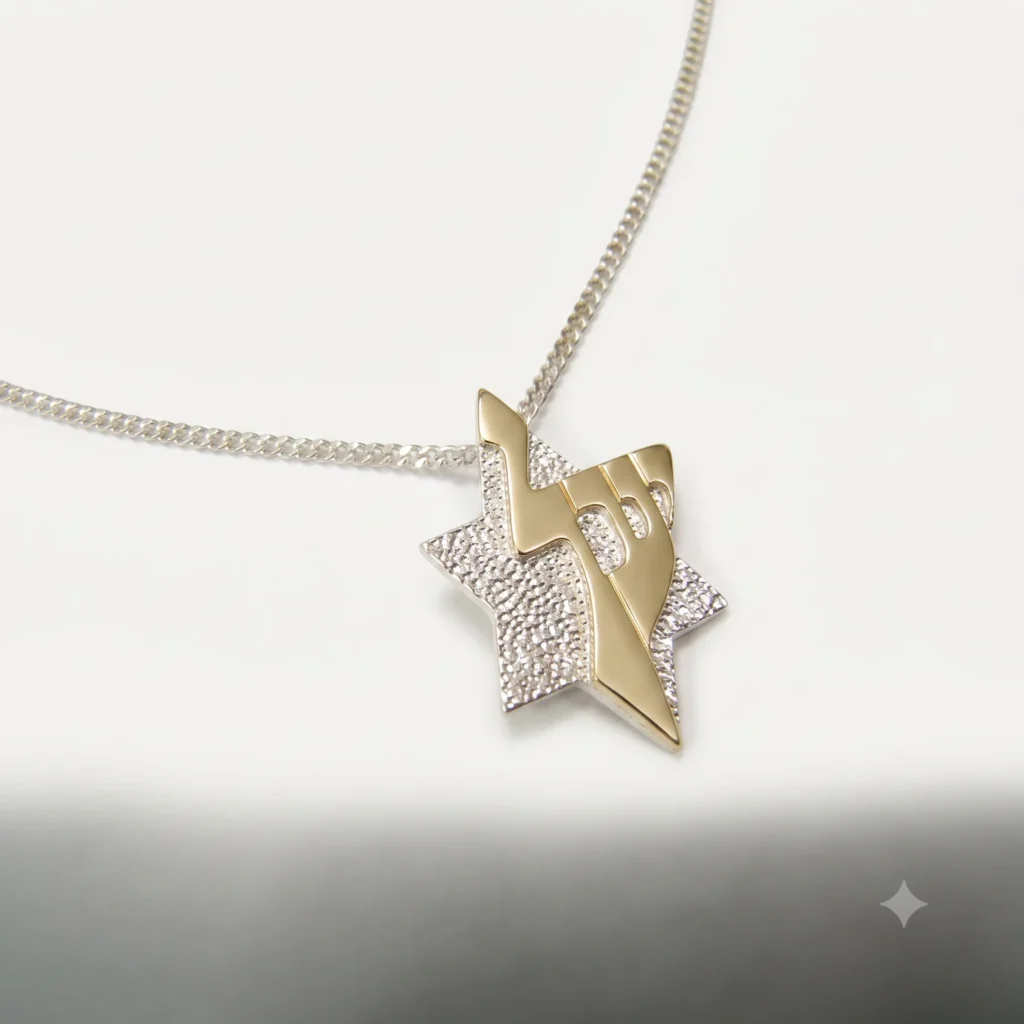
Enduring value comes from the integrity of a piece’s construction, not just its material composition. Beyond beauty: Material integrity. Clean, even solder joints, smooth edges, and balanced weight all assist a delicate cross or mandala pendant in maintaining its shape. Deep, sharp engraving keeps religious text readable after years of wear, while solid links in chains keep a pendant from slipping off. Robust workmanship undergirds the metaphor, as a flimsy setting can convey the converse message of neglect.
Simple maintenance ensures material integrity continues to serve you. Keep pieces in dry, individual pouches, away from aggressive cosmetics or perfume. Erase gold and platinum with a gentle soft cloth. Polish silver with a gentle silver cloth to slow tarnish. Remove rings or bracelets before heavy work, exercise, or swimming in chlorinated pools to prevent strain on settings and clasps.
Security checklist for settings and clasps
- Seek out any stones that rotate when you tap them gently.
- Check prongs: none should look shorter, bent, or sharp.
- Snap the clasp open and closed. It ought to snap shut with a distinct click.
- Inspect jump rings connecting pendants and chains for gaps.
- Get a jeweler to check settings annually, particularly for daily wear items.
The Artisan’s Touch
Handcrafted religious jewelry derives most of its significance from the hands that form it. Talented craftsmen convert religious motifs into miniaturized good luck charms in the same way that expert sculptors carve life-sized god idols with delicacy, precision, and reverence for time-honored techniques.
Traditional Methods
Old-school techniques underlie a lot of the custom work. Hand engraving allows an artisan to carve a verse, a petite cross or holy symbol directly into metal. Lost-wax casting begins with a wax replica of a pendant or ring, which is covered in plaster and then melted away so liquid gold or silver can fill the void. This manual, slow work is akin in spirit to how a brass or marble idol is carved, hand-polished, and even oxidized to give it an antique finish that feels timeless.
These practices assist with retaining cultural memory. In lots of places, carving a god idol is a ritual process, not just an art project. Artisans spend weeks or months shaping the body, verifying limb proportions, and ensuring every mudra, or hand gesture, adheres to sacred geometry intended to promote balance and energy flow. That same reverence for intricacy can translate into a petite lotus-shaped pendant, a Star of David, or an Om.
One surefire way to connect jewelry back to family roots is through ancestral motifs. The jeweler may reflect the lotus base of a temple idol in the rim of a pendant or transfer the crown and tilak motifs from a classic statue to the edge of a locket. Just as small hammers, fine chisels, and wooden mallets once carved the faces and postures of idols, they can now trace the form of haloes, rays, or calligraphy on metal.
Durability is another silent virtue of timeless craft. Strong solder joints, intelligent casting, and meticulous buffing, like the buffing that makes marble idols gleam temple-grade, enable a piece to endure daily wear and be handed down from generation to generation without losing form.
Modern Precision
Contemporary implements expand potential without shoving tradition. Computer-aided design (CAD) allows jewelers to sculpt a pendant in 3D, experiment with proportions, and see how a stone will lay next to a tiny saint. Laser engraving can cut clean lines for verses, names, or geometric patterns that might be too fine to carve by hand at such a small scale.
This technology is handy when you desire more intricate or condensed imagery, like a prayer in three languages, overlapping icons, or detailed images of gods that used to only be seen on statues. That same attention an artisan applies when chiseling jewelry and crowns on a statue can be reflected digitally through high-resolution scans and ultra-fine cuts.
Old school still generally manages a warmer, more organic surface. Modern is strong in symmetry, repetition, and a very sharp finish. Many of the best custom pieces combine both: hand-finished edges on a CAD-designed form or a laser-cut outline with hand-engraved inner detail. This combination provides flexibility without sacrificing the human touch.
The Collaboration
The most powerful custom work almost always begins with authentic collaboration. Artisans, in their eyes, are priests and sculptors to your tale and the sigils you adorn yourself with, before the idol is consecrated and animated in its last ceremony. A few jewelers even mumble mantras as they work, trying to maintain a settled mind while they set stones or polish a tiny talisman.
Customers contribute with the exchange of what’s most valuable. This might be pictures of temple idols you saw as a child, doodles of ancestral crests, or passing notes on what verses or mudras resonate. Describing why you favor something—gold, silver, brass, or some other metal from some god or tradition—gives the jeweler strong guidance and aids them in choosing what is considered fitting for that emblem.
A short checklist before you start a custom project can keep things smooth:
- The main icon in my life is the artisan. The artisan represents creativity and skill. This character signifies the importance of craftsmanship and the dedication to creating something meaningful. To me, the artisan embodies the spirit of hard work and the pursuit of excellence in every endeavor.
- Any textual or pictorial reference, like certain crowns, weapons, and lotus bases you’d like included.
- Preferred metals, stones, and size in millimetres
- From budget in one currency, for example, EUR or USD.
- When you have to get the piece finished, it gives you time for drawing, revisions, and final blessing if that’s your thing.
If you’re supporting a local or independent jeweler for this type of work, that can translate into more time for questions and adjustments. It preserves dying arts, from hand‑engraving minuscule tilaks to setting stones around a miniature halo, so every piece of religious jewelry can hold both artisan tradition and sentimental value.
A Legacy of Belief
Custom religious jewelry usually becomes more than just metal and stones. It becomes a silent testament to what a family believes and how that belief evolves and changes. Whether it is a date on the back of a cross pendant, a short Bible verse etched into a ring, or a favorite wood in prayer beads, they can pass through three or four generations and never feel outdated because the significance remains when the fashion shifts.
Most families consider these pieces heirlooms. A grandparent might order a custom cross with the family name and Proverbs 3:3 engraved on the back: “Let not mercy and truth forsake thee: bind them about thy neck; write them upon the table of thine heart.” That very cross might later adorn a baptism, then a confirmation, one day a wedding, each new date softly inscribed. The jewelry carries the memory of those moments in one place, so faith is not just learned in the tongue but worn in translucent, unshakable fashion.
Handing down personalized Christian jewelry helps younger generations experience faith as alive, not just in books or ancient tales. A tiny ichthus charm that sat on a great‑grandfather’s chain can transfer to a bracelet for a grandchild. Rosaries, prayer beads, or a dove pendant given at a first communion or graduation can indicate that faith continues to be a part of each new chapter in life. They spark genuine conversations about faith, uncertainty, optimism and decision-making since people inquire about them. A co-worker might spot a bible verse on a ring. A child might inquire why a dove, why not another bird. Every question provides an opportunity to describe what the symbol represents in your own family.
To maintain that legacy clearly, it helps to transcribe things down. They can remember when a garment was crafted, who donned it first, the meaning behind the emblems and which occasions it commemorated. A quick note tucked in with the jewelry box, a couple of lines in a family Bible, or a humble digital file can inform generations to come, so they receive not just an heirloom, but the narrative, the wisdom, and the faith, too.
Begin Your Heirloom
Your bespoke spiritual keepsake begins as a transparent vision of what you’d like to communicate about belief, relatives and remembrance. Then it transforms that vision into a tangible artifact of ore and gem that can endure for decades. Not just an accessory, but a testament to what is important to you in this moment, crafted to survive you, simply, quietly.
Design work starts with a talk that transforms loose thinking into a focused plan. Some arrive with a couple lines, a poem, an icon, or a doodle on paper. A skilled jeweler will then help mold this into a practical design, demonstrating what you can do with size, weight, and symbol placement so the piece still feels comfortable to wear daily. For others, that’s a petite gold cross with a mini inscription date on the reverse. For others, it could be a silver star and crescent pendant, a lotus, or an uncomplicated prayer line. You select the symbols, engravings, or gemstones that resonate with your personal narrative, not some generic one.
Craftsmanship and ethics are at the core of heirloom work. Heirloom‑worthy pieces come to life in handmade, slow steps — from carving wax models to setting stones under a loupe so that each claw sits snug. Most serious studios work in precious metals — gold, silver or platinum — and can add diamonds or other stones in a secure, balanced way. Many follow ethical practices: sourcing conflict‑free stones, using recycled metals when possible, and keeping clear records of where materials come from. The goal is a piece that’s right not just in your hand, but in the way it was crafted.
Backing from initial concept to finishing shine. The entire process can span days or weeks, depending on the design’s intricacy, number of stones, and how often you desire to receive updates or minor adjustments. Along the way, you can look over drawings, 3D renders, or test models, check scale, and tweak details like font style for a verse or stone cut. This maintains the piece’s functionality for its intended use, whether it is a slender, daily wear ring or a dressier pendant saved for ceremonial occasions.
These pieces often mark key faith moments: a gold charm for a baptism, a slim cross bracelet for a first communion, a matching set of bands for a wedding, or a pendant with birthstones for an anniversary. Others view the piece as a way to keep their faith close in difficult seasons, whether it be a small scripture verse, a guardian symbol, or a life-altering date. Eventually, that very item might be passed down from parent to child to grandchild, imbued with tales every time it changed ownership. Its value isn’t just in the metal and stones, but in the names, dates, and memories attached to it.
Conclusion
Custom religious jewelry means real things in real day-to-day life. Like a tiny cross on a chain. Or a sweet little star on a band. A verse on a charm’s reverse. Each one commemorates a vow, grief, a beginning or a silent faith.
Wise shoppers see beyond sparkle. They verify the metal, the craft, and the story. They inquire about who designed it, its durability, and its representation of religion and heritage.
To begin your own, simply write down one symbol, one date, or one brief line that means the most. Speak to a craftsman who hears and demonstrates work. Make that concept into something authentic, wearable, and something you can pass down.
Frequently Asked Questions
What is custom religious jewelry?
A custom religious jewelry is a commissioned piece that reflects a particular religion, iconography, or scripture. Whether it’s crosses, stars, mandalas, scriptures, or personal icons, each element — metal, stone, and engraving — is personalized to fit your faith and narrative.
How do I design my own religious jewelry piece?
Begin with a symbol, text, or image that holds significance for you. Then choose metal, finish, and any stones. A master jeweler translates your thoughts into sketches or 3D models and polishes them with you prior to creating the ultimate jewel.
Which metals are best for meaningful faith jewelry?
Metals such as gold, platinum, and sterling silver are favorites for their longevity and classic aesthetic. They are hypoallergenic for sensitive skin. Quality metals shield engravings and details, allowing your custom religious jewelry to be cherished for generations.
Can custom religious jewelry be worn every day?
Yep, if it’s crafted with quality materials and solid craftsmanship. Daily-wear faith pieces tend to be built with solid settings, rounded edges, and sturdy chains. Your jeweler can point you in the direction of the best designs and metals for day-to-day wear.
How long does it take to create custom religious jewelry?
The majority of our bespoke orders require three to eight weeks from design to delivery. Time varies by complexity, materials, and engraving. Plain styles go quicker. Detailed symbols or hand-carved pieces take more time for the meticulous work.
Is custom religious jewelry suitable as an heirloom?
Yes. Our custom faith jewelry is perfect as an heirloom. Hard metals, durable settings, and a considerate design all help make sure it can be handed down through your family with its narrative preserved.
How do I care for my custom religious jewelry?
Wash it sparingly with a little bit of mild soap and water and a soft cloth. Keep away from hard chemicals and high temperatures. Keep pieces separate to avoid scratches. Routine maintenance visits keep stones tight and metal accents crisp, maintaining beauty and significance.
Need help bringing a custom jewelry idea to life? Explore Mark Katzeff’s full suite of services, crafted with precision and purpose.
Custom Goldsmith Design Services
Personalized Necklaces, Pendants, and Brooches
Corporate Jewelry and Brand Identity Pieces
Looking to learn more about the world of jewelry and craftsmanship? Check out these reliable educational resources: