
- Key Takeaways
- Why Choose Rare Material Rings?
- A Journey Through Materials
- The Artisan’s Craft
- Beyond the Physical Form
- Sourcing with Integrity
- Selecting Your Personal Artifact
- Conclusion
- Frequently Asked Questions
- What makes rare material rings different from regular rings?
- Are rare material rings durable enough for everyday wear?
- How can I be sure the rare materials are sourced ethically?
- Do rare material rings require special care?
- Are rare material rings a good choice for engagement or wedding rings?
- How do I choose a rare material that fits my personality?
- Are rare material rings more expensive than traditional rings?
Key Takeaways
- The rare material rings provide exclusivity and individuality, making each piece more than just a typical accessory. They resonate with individuals who appreciate a personal narrative, symbolism, and unique design elements in their jewellery.
- With materials from outer space, prehistory and earth, you get a different kind of connection, whether it’s to the universe, ancient life or nature. Knowing these roots assists the reader in selecting a ring that resonates with their personality, belief system and curiosity.
- When it comes to making rings from meteorite, fossilized bone, ivory, rare woods or unusual minerals, there’s a whole different set of skills and techniques required. Handcrafting with seasoned artisans adds longevity, protects delicate materials and creates superior bespoke designs.
- Rare material rings frequently have cultural, spiritual, or personal significance beyond aesthetics. They can be conversation pieces, heirlooms, or even symbols of a person’s identity, adventure, heritage, or life milestones.
- Responsible sourcing and verified authenticity for rare material rings, particularly when fossils, ivory, or precious minerals are concerned. Buyers demand paperwork, ethical assurances, and transparency on exactly where and how materials were procured.
- Picking a rare material ring is most effective when lifestyle, care, and customization factors are viewed holistically. By evaluating everyday wear, care requirements, and design opportunities, Anstead guides readers in choosing a significant ring that remains both gorgeous and functional.
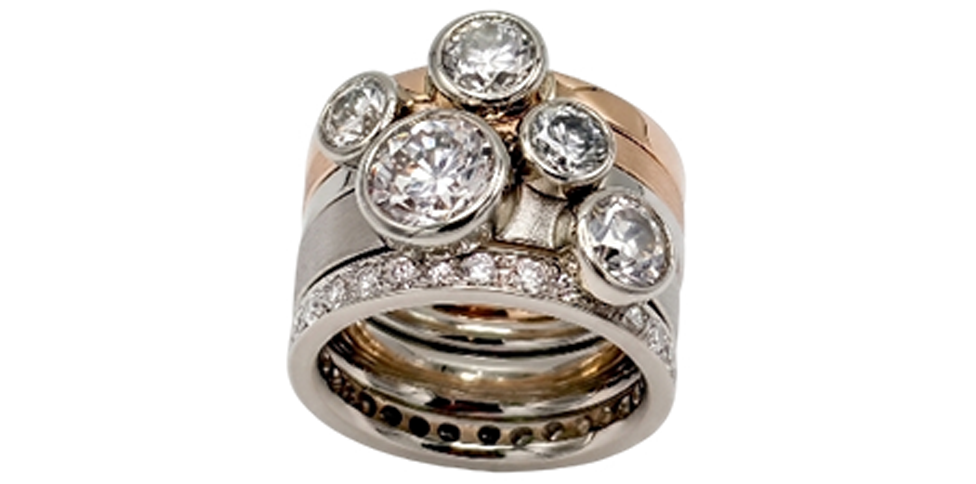
Rare material rings are bands crafted from uncommon metals, stones, or organic materials that distinguish them from traditional gold or silver jewelry. They commonly incorporate meteorite, damascus steel, titanium, wood, or even dinosaur bone and can infuse them with gems or precious metals. Many guys opt for these rings because they want something different, more durable, or they have a significance related to where the material comes from. Certain rare materials better resist scratches and others display stunning grain, coloration, or pattern. Some choices require additional attention, so understanding the fundamentals is beneficial before you invest. The following sections demystify the types, pros and cons, care tips, and key points to inspect before purchase.
Why Choose Rare Material Rings?
Rare material rings provide a sense of exclusivity that typical gold or silver bands lack. Each piece relies on an exotic source, scarcity, or intricate manufacture, so the ring resonates more as an intimate talisman than a mass-manufactured bauble. They appeal to those who desire a unique piece and value story, not just sparkle.
1. Cosmic Origins
Meteorite rings incorporate actual pieces of stony-metal meteorite, typically from iron-class falls that occurred millennia or even millions of years in the past. The most distinctive element is the Widmanstätten pattern, a natural geometric motif that emerges as the metal cools in space over millennia. No two slices align, so each ring features a pattern that you can’t copy or cast.
Wearing a meteorite ring is like wearing the universe on your finger, which strikes a chord with those who have a love for science, astronomy, or simply something ancient and beyond earth’s timeline. Genuine jewelry-grade meteorite is scarce, and barely a fraction of what lands is stable, legally accessible and jeweler-workable. That rarity contributes to the sentimental value and the lasting value.
2. Ancient History
Mammoth ivory and dinosaur bone provide a tangible connection to the prehistoric past. The mineral replacement of organic matter over time transforms into fossils, which can form dense, vibrant, jewelry-grade cuts and polished material.
There’s something awfully appealing to a lot of people about wearing a tiny slice of Earth’s ancient history on their finger. Meanwhile, legal and ethical checks count. Accountable artisans source from trusted fossil suppliers, adhere to local and global regulations, and steer clear of protected or sacred grounds.
3. Personal Story
Rare materials can note life milestones the way plain metal can’t. A platinum wedding band might mirror a grandparent’s pre–World War II ring, linking contemporary oaths to family legacy, while leveraging a metal that’s mined sparingly, with annual production at about 10% of the world’s gold.
Others opt for mokume gane as an anniversary band, as its layered, wood-grain pattern can symbolize two lives intertwined. Others incorporate meteorite, fossil, or even rare hardwood inlays to commemorate locations, professions, or ancestry. They typically become heirlooms that are passed down with the narrative of the selection of that particular material.
4. Unique Aesthetics
Rare material rings typically look and feel completely different than traditional yellow gold bands. Platinum has a cool, dense weight and a soft grey-white tone that a lot of people find understated. Tungsten delivers a darker, more industrial aesthetic and offers superior scratch resistance and hypoallergenic comfort for everyday wear.
Mokume gane presents flowing, layered lines in mixed metals like silver, gold, and copper hued alloys, each piece bearing a handwork, not stamped, pattern. Meteorite can display jagged, etched lines, and fossil bone might have speckles or a web of cells. These colors, textures, and patterns provide designers the flexibility to combine rare materials in stacks, inlays, or contrasting edges so each completed ring is effectively unique.
5. Tangible Connection
Rare material rings provide an immediate, tangible connection to something beyond the daily grind, be it deep space, ancient Earth, or the arc of a family’s history. Wearing such a ring can nudge you to think about where the material came from: a meteor fall field, an old riverbed, or a long-closed platinum mine first noted by Spanish Conquistadors in the 16th century.
A lot of folks feel the sensory edge. Platinum is solid and cool to the touch. Tungsten is a unique heavy draw. Etched meteorite is delicately textured beneath the fingertip. These characteristics, in addition to their exotic provenance, create rare material rings that are powerfully compelling conversation pieces and constant reminders of what the wearer holds dear.
A Journey Through Materials
Rare material rings pull from wildly disparate sources, and each informs how the ring appears, wears, and even how it is priced.
- From space: meteorite, tektite, and other verified extraterrestrial fragments
- From prehistory: Fossilized dinosaur bone, mammoth ivory, and other ancient organic remains.
- From earth: rare woods, unusual gemstones, distinctive minerals, and rare earth element accents
Space-derived materials are often rare and science-based, with lab reports showing that they exist. Prehistoric pieces come across more story-like and personal, connected to once-living existence. Earth materials are the widest category, more readily customized for everyday use and typically easier to care for or swap out. Designers blend these sources to craft bespoke rings that balance scarcity, strength, cost, and morality.
From Space
Meteorite bands typically use iron-nickel slices with Widmanstätten patterns, those cross-hatched lines that only develop when metal cools for millions of years in space. Tektites, such as moldavite, are natural glass that forms when meteor impacts melt rock and can be used as an inlay or center stone with rich green or black hues.
Genuine space stuff is usually verified with microscopy, chemical analysis, and comparison to established meteorite categories. Labs examine nickel content, trace elements, and crystal structure so a buyer can compare the ring’s sample to a known meteorite type.
Those that select these rings tend to associate them with concepts such as distance, time, and human inquisitiveness. The symbolism is usually grounded in science, not myths. It involves real matter that crossed space and was then cut, polished, and set.
- Simple meteorite sleeve inside a metal band
- Meteorite inlay paired with titanium, platinum, or gold
- Tektite cabochon in minimalist prong or bezel setting
- Mixed meteorite–gemstone designs that echo night‑sky colors
From Prehistory
Colours and patterns in these fossils arise from minerals that substituted or permeated the organic tissue. Iron can bring reds, manganese brings purples, while silica may stay pale. That combination provides each ring with an appearance that is nearly impossible to replicate using contemporary materials.
A lot of purchasers have these rings as hush story items. The band can signify a connection to deep time, science or an appreciation for natural history, not just opulence.
Responsible sourcing is important. Legal mammoth ivory typically originates from licensed digs in cold climates, and numerous jurisdictions prohibit or limit fossil sales from significant heritage locales. Trusted artisans trace sources where feasible and steer clear of safeguarded dino fossils destined for study or museums.
From Earth
Earth‑based rare materials range from dense hardwoods such as ebony or desert ironwood to small‑production gemstones to unusual minerals with strong visual character. Some makers incorporate REE traces into alloys or coatings to impart faint color or magnetic properties, despite REEs being more prevalent in tech than jewelry.
REEs are a set of 17 elements, the lanthanides, plus scandium and yttrium. They are vital for various industries, with close to 48% of global REE demand used for permanent magnets. Neodymium accounts for approximately 36% of the demand, cerium 31%, lanthanum 18%, and praseodymium 7%. Light REEs, such as lanthanum, cerium, praseodymium, neodymium, promethium, samarium, europium, gadolinium, and scandium, are more abundant in mining production but remain challenging to process.
China accounts for approximately 69% of worldwide REE mine output, increasing from an estimated 120,000 tonnes in 2018 to 240,000 tonnes in 2023. Canada has an estimated 15.2 million tonnes of rare earth oxide in the ground and advanced exploration projects but is not yet a commercial REE producer. Global production increased rapidly in 2018, surged in China and peaked for other regions in 2021 before fluctuating annually. That very supply chain now serves specialty jewelry alloys and coatings, even as the majority of REE tonnage feeds magnets and high-tech products, typically through processes such as rare earth fluoride creation and metallothermic reduction.
Being green is about what you use and how you source it. Rare woods are habitat loss if they’re not from managed forests. Gemstones can be heavily mined, with water usage and waste, and many rare minerals are sourced from countries with weak governance. Purchasers who care are requesting recycled metal, certified stones, along with documented chains of custody.
With geological processes, there’s an additional layer of rarity. Slow cooling of magma, high pressure over millions of years, and the right chemical mix all determine which minerals form and how they clump together. This is why some rings have one-off inclusions or zoning that will never happen again.
Pairing strategies often focus on contrast: dark wood with bright titanium, pale gemstones with blackened silver, or textured minerals set in smooth platinum. Other makers riff off high-tech associations by combining REE-bearing alloys with minimalist, streamlined shapes, tipping their hat to how these elements fuel smartphones, turbines and electric vehicles.
The Artisan’s Craft
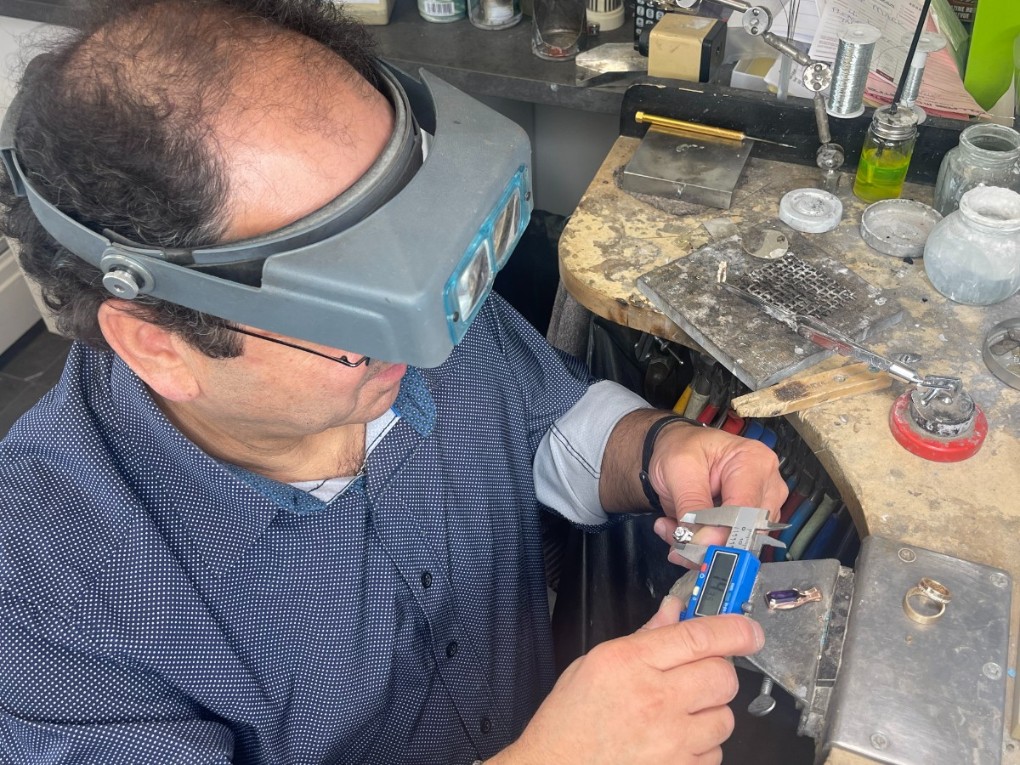
Rare material rings are more reliant on the artisan’s craft than nearly any other jewelry. All of these rings are crafted by experienced artisans who dedicate years to studying how various metals, stones, and organic materials respond to heat, pressure, and time. Handcrafted goods, as opposed to machined ones, will always bear slight imperfections or minor variations in grain. Those marks aren’t blemishes; they’re indicators that a flesh and blood human formed the work. Handcrafted wedding bands have been a thing for thousands of years, from ancient Egyptians gifting rings of reeds, leather, or bone to signify love and eternity to today’s artisans molding meteorite, fossil, and reclaimed wood into bands with the same intention.
Artisans working with rare or fragile materials use handcrafting to manage every level. Even if two folks select the same design, the specifics are never exactly the same because each piece of meteorite, antler, or opal slab acts differently. Unlike mass-produced bands, every hand-crafted wedding ring has faint tool marks, slight line adjustments, and small polishing variations that contribute to its distinctive nature. Several artisan jewelers like to work alongside clients, from initial sketch to final polish, tweaking width, profile, and texture so the outcome fits the wearer’s life, not a factory mold. By opting for this path, you buy into personality and a personal connection to the artist, not a fleeting, mass-market fad.
Unique Techniques
It begins by taking rare materials and stabilizing them so they’ll endure. Meteorite demands cautious acid etching to reveal the crystal pattern without eating the surface, then sealing to resist rust. Fossil ivory or bone needs to be slowly dried and vacuum stabilized with resin so it won’t crack once cut into thin ring segments.
Inlay and lamination preserve fragile cores. A slim slice of turquoise, fossilized wood, or dino bone is hammered into a trench inside a rugged band of titanium or platinum, with micro-gaps sealed with translucent resin. Lamination layers, such as gold over carbon fiber or wood lined with metal, distribute stress and keep the precious materials out of everyday contact. These stages demand meticulous sanding, multiple test fits, and constant inspection under magnification.
| Material | Key Technique | Main Tools Used |
|---|---|---|
| Meteorite | Etching + sealing | Acid baths, fine files, micro‑polishers |
| Fossil ivory/bone | Vacuum stabilization | Vacuum chamber, resins, micro‑drills |
| Opal | Inlay in metal channels | Flex‑shaft, gravers, precision burs |
| Wood | Lamination + sealing | Clamps, lathes, moisture meters |
| Carbon fiber | Layered layup | Molds, cutting discs, respirators |
Throughout all of this, accuracy and persistence determine the tempo. Hurrying a cut or forcing a delicate piece too far on the lathe can sabotage hours of labor, so multiple passes take place in millimeters, not centimeters.
Design Challenges
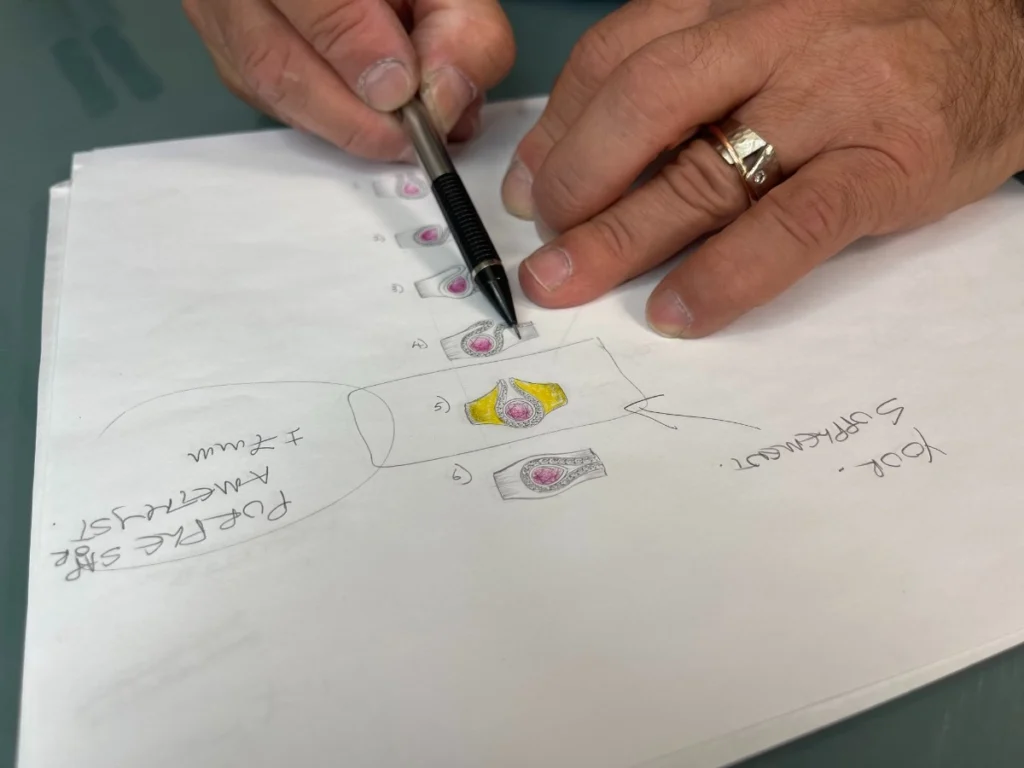
Scarce resources impose genuine constraints. Most are brittle, porous, or are in irregular shapes that don’t fit nice ring blanks. Fossil ivories can split along unseen grain lines. Some meteorites contain soft areas that flake off while you etch.
To work around this, artisans map each piece prior to cutting, study grain direction and eliminate weak areas early. They might pattern a partial inlay rather than a full band, or rim a softer center with a hard metal protective rim. The goal is to let the eye hold the rare material as the strong metal does the heavy labor.
Balancing looks and strength means every part of the setting is thought through: thickness of the shank, height of edges, and how far the rare material sits from the outer surface. Custom bezels, deep channels, or full liners in platinum, gold, or steel are like armor, so the ring can be worn every day without asking the rare material to do more than it can safely handle.
Modern Innovation
New tools expand what’s possible with precious materials. High‑res 3D modeling allows us artisans to test ring profiles on screen, perform stress tests and adjust thickness around inlays before they ever handle the actual meteorite, opal or wood. Laser cutting and engraving provide crisp cuts in hard alloys or carbon fiber and enable ultra fine grooves that contain miniature inlays of gold dust, colored resin or even crushed meteorite shards.
A number of rings these days employ hybrid designs, combining traditional bands in platinum or 18-karat gold with unexpected cores or edges of stabilized wood, ceramic, or forged carbon. Other makers tinker with lab-grown materials, like cultured opal or engineered composites, alongside natural stones, so clients can opt for rarity, ethics, and price with more flexibility. There is in the studio constant experimentation with new mixes, including metals combined with concrete, region-specific sands embedded in clear resin, or repurposed technical materials like circuit board traces. Each one is tested for durability, comfort, and longevity prior to being presented to customers.
Beyond the Physical Form
In this episode of About: Beyond the Physical Form, rare material rings occupy a crossroads of faith, reminiscence, and international supply routes. They tell stories of where the substance originated, who molded it, and what the wearer desires to communicate regarding their position in the world, not just their appearance on the hand.
Cultural Symbolism
Numerous cultures imbue significance to exotic substances in rings and other jewellery. In certain Indigenous cultures, copper and silver designate rank or clan affiliation, while engraved jade in East Asia signifies purity and longevity. In some regions of South Asia, gold bands continue to symbolize riches, obligation, and lineage. In some Arab cultures, certain gems like agate or turquoise are adorned for their protective or blessed properties, not merely style.
Certain substances possess a profound spiritual or ancestral potency. A meteorite in a ring can imply a connection to the heavens or to destiny. Fossil ivory or mammoth tooth can connect the wearer to a distant earth, even as the majority of purchasers today demand transparent sourcing and legal documentation because of wildlife issues. Even rare earths, which include the 17 REEs, 15 lanthanides, and scandium and yttrium, can accrue symbolic value as “minerals of the future,” associated with technology and advancement.
Rareness rings frequently appear in rites. A family signet inherited at weddings can serve as a silent promise to hold history and present together. In certain cultures, coming-of-age rings might utilize stones or metals bound to local legends, like river stones or volcanic glass.
By means of these practices, jewellery becomes a vehicle of cultural identity. A ring can contain words, territory and ancestry in a compact mobile vessel that is significant for those who wander, emigrate or straddle spaces.
Modern Mythology
Today, rare material rings tap into new types of myths that encircle science and international commerce. A ring created with iron from a meteorite or inlay from a 4 billion year old zircon can represent a wonder about the cosmos and the ancient narrative of the earth, even when the frame is a modest band.
To others, possessing this type of ring implies a personal quest. A band embedded with gold from a century-old mine and bits of copper wire, the same material used in data centers and fibre optics, can signify a life spent constructing or navigating virtual worlds. A ring that incorporates minerals used in microprocessors or EV batteries can resonate with work in engineering, climate tech, or research without any branding or wording.
Cosmic and prehistoric motifs are now de rigueur on contemporary jewellery lines. Makers employ dinosaur bone, Gibeon or Campo del Cielo meteorite, and even tiny inlays of rare earth alloys that can be found in magnets within wind turbines and EVs. This connects a private good to huge trends like the transition to low-carbon energy, where the need for key minerals is skyrocketing.
Narrative ties these strands together. A buyer may hear that China accounted for approximately 69% of global REE mine production in 2024, which is roughly 270,000 tonnes, while Canada boasts in excess of 15.2 million tonnes of rare earth oxide resources and is drilling in areas such as the Ring of Fire, which potentially contains a 100-year supply of critical materials but is constrained by the lack of roads and year-round accessibility. With this in mind, the ring is a vehicle for discussing supply shocks, like the 2010 embargo that sent rare earth prices soaring more than tenfold over the course of a single year, and for how tiny stones connect to energy policy, trade, and risk.
Personal Expression
For me, uncommon material bands provide a means to coordinate style, philosophy, and lifestyle. A clean energy worker might opt for a band that’s recycled platinum with a thin inlay of a critical mineral, a silent reference to those used in EV motors and storage. Yet another could opt for salvaged shipwreck brass or lab-grown stones for a ring that’s rare in story as much as scarcity.
Unorthodox materials can speak volumes about personality. A black zirconium ring with a meteorite slice could reflect a preference for low-key style and hard-hitting significance. A band that combines wood from a special location with a polished metal interior can display allegiance to a hometown or time spent in nature instead of a designer label.
Mixing materials opens up even more space. One could unite recycled gold, a band of Canadian nickel from a specific mine, and a thin rail of ceramic. One could coat a titanium base with crushed turquoise and a line of rare earth alloy dust, so that it felt different in every light. Each blend lets the wearer pick what to honor: place, profession, or a cause that matters.
Custom design brings this full circle back to identity. In collaboration with a maker, a buyer can decide not only the metal and stone but how the sourcing story is narrated and documented, from mine or recovery site to ring. That kind of selection makes the ring a clear, consistent symbol of them as a person and what they represent, not a generic luxury good.
Sourcing with Integrity
Ethical Origins
Ethically sourced rare materials originate from supply chains free of conflict funding, forced labor, and unsafe work, and which adhere to transparent environmental standards. For uncommon inputs such as meteorites or platinum, this typically translates to legitimate mining or harvesting, equitable compensation, and accurate documentation that trace where and how the substances were excavated or reclaimed.
Key forms of proof include:
- Third‑party certifications (for example, conflict‑free gold schemes)
- Mine‑of‑origin or country‑of‑origin documents
- Chain‑of‑custody reports tracking each step in the supply chain
- Recycled metal certificates from refiners
- Laboratory reports for diamonds and colored stones
- Written sourcing policies from the brand or artisan
Selecting ethically sourced rings provides cleaner peace of mind. The purchaser knows that his or her meteorite slice, platinum band, or special gem isn’t connected to human rights abuse or gang mining and that someone has verified both legal and environmental standards in the process.
Before you buy, it’s fair to ask straight up about sourcing, audits and the maker’s approach to risk. A conscientious jeweler should be able to provide at minimum basic documentation or discuss what they’re still striving to optimize.
Material Authenticity
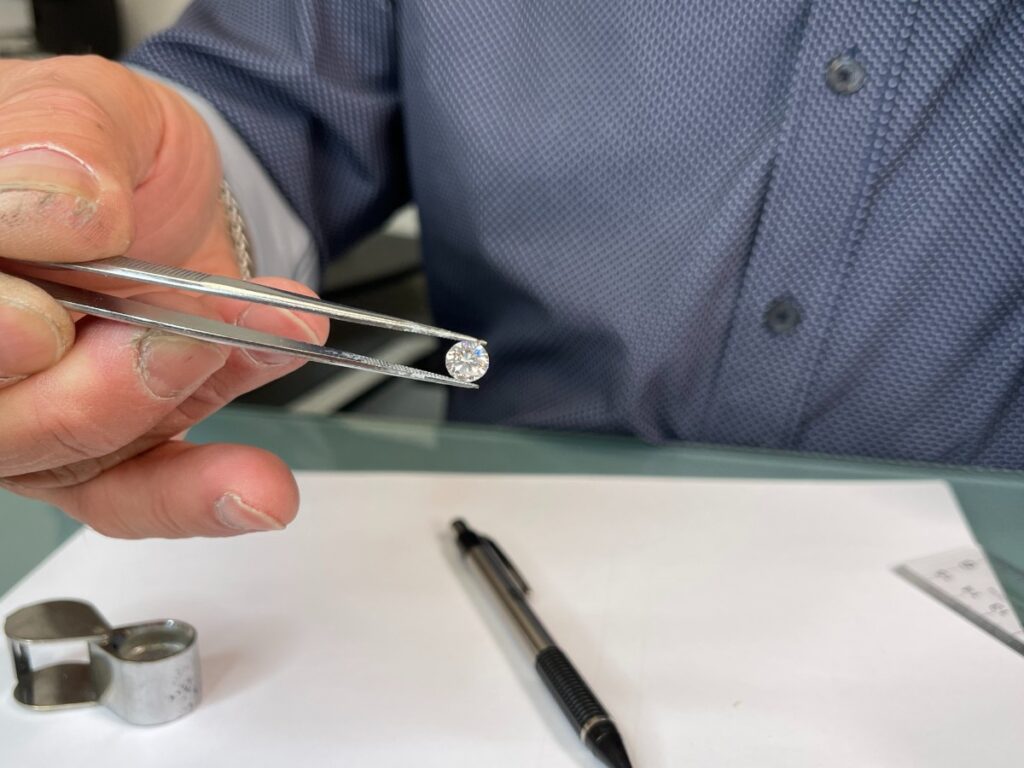
Authenticity verification is important when the content is unusual, costly or difficult to substitute. Whether you’re a collector or an everyday buyer, you should have the information to know if a ring actually has Gibeon meteorite, high-purity platinum, or an antique gemstone and not a look-alike alloy or coated base metal.
Source or lab test verification aids in affirmations. Information from trusted gem labs, metal assays, and even invoices can confirm precise content, weight, and origin. It’s handy for insurance and subsequent resale.
It’s not the imitations and synthetics themselves that are a problem. It’s when they’re sold as natural or as something else, a rarer material. Mislabelled “meteorite” steel or “platinum” plating can trick buyers, undermine trust and skew price.
Genuine materials generally hold value more tightly. Transparent sourcing bolsters value, facilitates resale, and safeguards the enduring value of those who wear their ring as both a sentimental and monetary asset.
Sustainable Practices
Sourcing with integrity looks at the entire footprint of the ring, from extraction to finishing, and attempts to minimize harm at every stage. This frequently entails utilizing reclaimed or recycled metals, like gold and platinum obtained from vintage jewelry or industrial scrap, and processing them for fresh rings instead of beginning new large-scale mining. It can even be naturally shed materials, like shed antler or shell, where no additional harm is caused in sourcing them.
Recycled metals mean fewer new mines, less energy in many instances, and contribute to waste reduction. Since platinum and gold mining are hard-hitting and land heavy, recycled stock is one real option for minimizing footprint while still operating with these precious metals. This same thinking backs lab-grown diamonds, which are widely perceived as a lower impact alternative to certain diamond mines, so long as the energy and production processes are similarly disclosed.
Artisans who commit to eco-friendly methods often share details about their workshop habits: non-toxic polishing compounds, careful waste collection, and casting methods that cut down on scrap. Others monitor the carbon footprint of shipping, batch-cast rings to conserve energy, or engineer settings that require less metal without causing the ring to feel flimsy or fragile.
The entire life cycle counts, too. Buyers have the opportunity to consider the reparability, resizability, or eventual recyclability of a ring. A rare material ring that can be re-polished, reset, or even melted down for a new piece remains useful for longer and keeps its resources in use, not in a landfill.
Selecting Your Personal Artifact
Lifestyle Match
Start with your daily life. If you type, cook, lift or work with tools most days, a hard-wearing metal like platinum, titanium, or carbon fiber usually fares better than a softer metal or frail organic piece. If your work is easier on your hands, you have more space for subtle inlays of wood, shells, sand or even shark teeth embedded in clear resin.
Care counts as much as appearance. Damascus steel provides dramatic, wood-grain patterns and requires more effort to maintain dry and clean. A ring with exposed wood or sea treasures might require regular oiling or crack inspections, while solid gold or platinum require less day-to-day consideration.
Comfort is so easy to forget. Inspect the inner profile, weight, and any sharp edges from inlays or textures. A ring that suits your lifestyle and delights you every time you glance at it is the ring that will remain on your finger, not tucked away in a drawer.
Durability and Care
Follow a basic care checklist for your specific materials. For metals like gold, platinum, and silver, clean with mild soap and water, dry well, and avoid harsh chemicals. For Damascus steel, wipe dry after contact with water, store away from humidity, and oil lightly if advised. For organic elements like wood, shells, sand, or shark teeth set in resin, keep away from strong heat, avoid hard knocks, and clean with a soft, damp cloth rather than abrasive products.
Schedule regular checkups. A once-a-year once-over by a jeweler or artisan catches loose settings, worn prongs, or hairline cracks before they escalate. This is particularly useful if the ring has multiple materials that age at varying rates, such as metal, wood, or resin.
Storage impacts longevity. Store the ring in a lined box or soft pouch, separate from sharp pieces that will scratch precious stones. Put it away somewhere dry, not on a bathroom shelf, so that humidity doesn’t gradually rust steel, erode wood or organic inlay that connects you to those memories.
Customization Potential
Rare substances provide a broad canvas for bespoke craftsmanship, and that’s where the ring begins to have more the aura of an artifact and less of a cookie-cutter bauble. One band might blend platinum for durability with a Damascus steel sleeve for pattern, and a delicate channel of wood from a family tree or sand from a beloved shore. A few clients opt to set shark teeth or petite shells as miniature accents or dangle them in a slim resin band window that encircles the ring. Engraving on the inner band, subtle symbols on the outer edge, or fine inlay lines that mark significant dates or coordinates all assist in securing your narrative in a manner that isn’t ostentatious but is deeply personal. The most useful step is an open talk with an experienced artisan: bring your list of meaningful materials, discuss how you use your hands each day, and work together through drawings, samples, and tests to reach a design that can actually be built, will wear well, and still keeps the small details that matter most to you.
Conclusion
Rare material rings have real weight in daily life. They celebrate milestones such as a move, a loss, a win, or a promise that endures. Every one connects unrefined soil, human craft, and your narrative. A ring can bear iron from ancient vessels, earth from remote wilderness, or stone from distant coast. That blend, my friend, tastes mighty and fresh.
To select a ring size, trust your eye and your gut. Verify the provenance, pose tough inquiries, and don’t rush. Think hard about how the ring feels on skin, how it sits in light, and what memory it might hold for you in a decade.
Try on three rings today and see which one occupies your thoughts.
Frequently Asked Questions
What makes rare material rings different from regular rings?
Rare material rings incorporate uncommon metals, minerals, or organic materials. They’re incredibly beautiful. Many have unusual colors, textures, and histories. They shine as personal talismans, not just bling.
Are rare material rings durable enough for everyday wear?
Most rare materials are very strong. Longevity varies based on material and ring construction. Query the craftsperson about hardness, scratch resistance and care requirements prior to everyday wear.
How can I be sure the rare materials are sourced ethically?
Opt for jewelers who provide transparent sourcing details. Seek out traceable supply chains, fair labor, and environmental standards. Independent certifications and transparent storytelling aid in confirming ethical sourcing.
Do rare material rings require special care?
Yep, some do. Some woods, fossils, or meteorites require protection from water, chemicals, or impact. Your jeweler should provide basic care instructions specific to the exact material.
Are rare material rings a good choice for engagement or wedding rings?
They sure can if you appreciate rarity and meaning. Think about durability, everyday comfort and long-term care. A lot of couples go for rare materials to mirror a personal narrative or shared interest.
How do I choose a rare material that fits my personality?
Start with what inspires you: nature, space, history, or technology. Then pair a material with that theme, like meteorite, fossil, or reclaimed wood. Consider what you want the ring to communicate.
Are rare material rings more expensive than traditional rings?
Not necessarily. Some rare materials are less expensive than gold or platinum, and some are super exclusive. Cost is based on rarity, artisan work, and design rather than material alone.
Need help bringing a custom jewelry idea to life? Explore Mark Katzeff’s full suite of services, crafted with precision and purpose.
Looking to learn more about the world of jewelry and craftsmanship? Read from these reliable educational resources: