
- Key Takeaways
- Custom Engagement Ring Timeline
- Why Start Early
- Custom Design Versus Stock
- Prepare for Design Consultations
- Optimize Long-Term Ring Durability
- Plan Edmonton Bespoke Services
- Conclusion
- Frequently Asked Questions
- How long does it take to create a custom engagement ring?
- When should I start the custom engagement ring process?
- What is the difference between a custom ring and a stock ring?
- How can I prepare for a custom ring design consultation?
- How do I make sure my custom ring is durable for everyday wear?
- Are custom engagement rings more expensive than ready-made rings?
- What should I look for in an Edmonton bespoke engagement ring jeweler?
Key Takeaways
- Custom engagement rings are a multi-step process that includes consultation, sourcing the right stones, CAD modeling, casting, setting, and finishing. They take longer than just grabbing a ring off the shelf. Assume a few weeks to several months from initial consultation to final delivery.
- Beginning the process early, in September or October for holiday proposals, keeps you ahead of holiday order cutoffs, supply bottlenecks, and hasty choices. Working backward from your proposal date, pad your timeline with extra buffer time for edits and unforeseen hiccups.
- A little pre-planning before your design consultation makes the process smoother and includes setting a budget, confirming ring size, gathering style inspiration, and establishing must-haves like certain stones or engravings. Share these details with your jeweler, allowing them to match the design to your vision from the start.
- While custom designs provide more control over stone, metal, setting, and meaning than stock rings, they demand more time and effort on your part. Determine if the uniqueness and sentimentality are worth the extended timeline relative to the immediacy of selecting a pre-made ring.
- Budget, style direction and precise finger measurements all influence the design and the timeline, so be open with your jeweler about them. Inquire about an itemized quote, resizing policies and options that might save you money like lab-grown diamonds or recycled gold.
- Long-term durability really depends on the metal type, setting style and ongoing maintenance, so ask about secure settings, metal choices, warranties and care regimens. Simply schedule regular cleanings and inspections to maintain your custom engagement ring safe, comfortable and stunning for years to come.
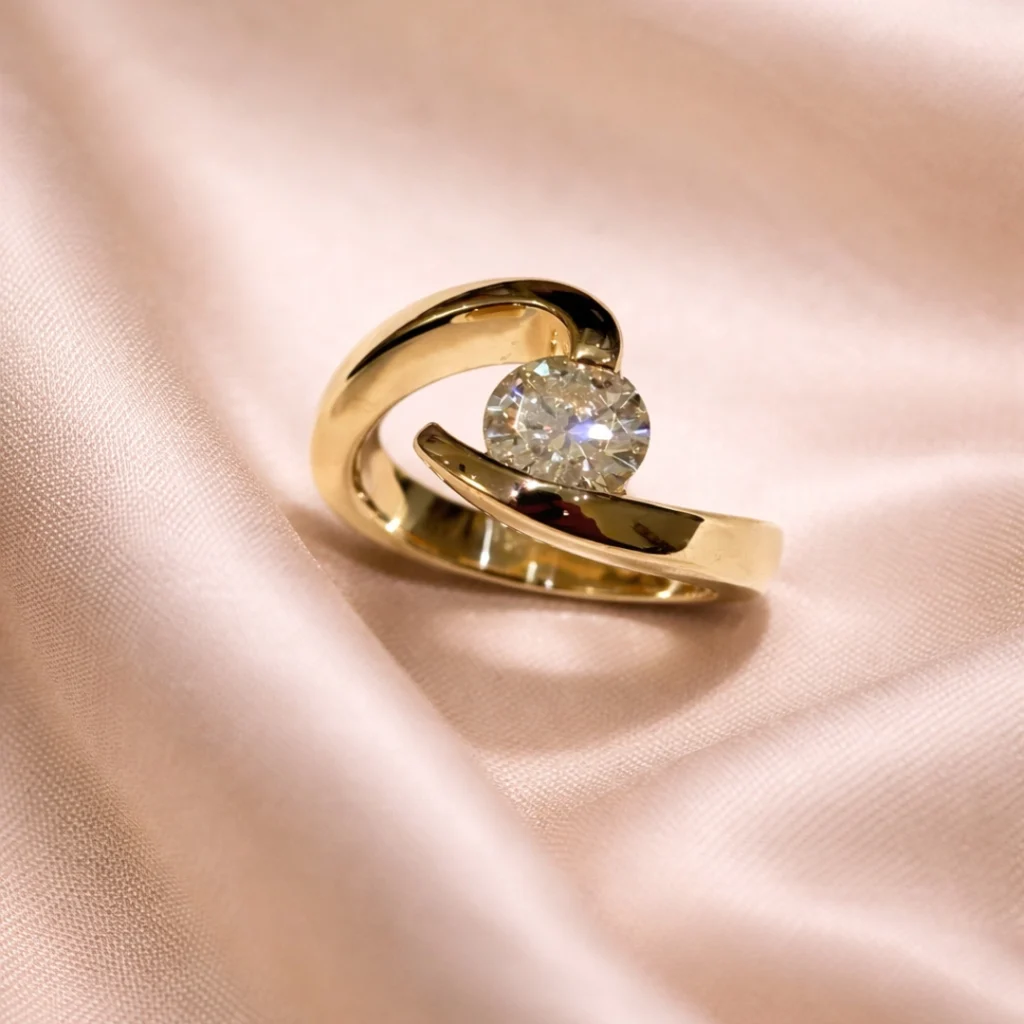
A custom engagement ring is a ring crafted and created to fit one individual’s style, budget, and narrative from beginning to end. While some buy into a preset design, most opt for custom rings so they can select each key detail, from diamond shape to metal type to band style. Custom work typically starts with a concept or sketch and proceeds through phases like stone selection, computer renderings, and ultimate handwork at the bench. Prices can vary greatly depending on carat weight, metal, and complexity of design. Therefore, clear planning goes a long way. Up next, the main body strolls through each step so the process comes across as transparent, reasonable, and less anxious from initial concept to completed ring.
Custom Engagement Ring Timeline
A custom engagement ring generally takes far longer than purchasing an off-the-shelf ring, as every step is custom-fitted to a single design and a single person. Most custom projects run about 4 to 6 weeks, but the full range is closer to 4 to 12 weeks, with 6 to 8 being common when there’s detailed work or special stones. A safe rule is to begin at least 2 to 3 months prior to your proposal date, so you have room for revisions, shipping, and any slowdowns outside anyone’s control.
1. Initial Consultation
- Consultation and up-front planning typically requires 1 to 3 weeks. This begins with a consultation, either in-person or virtually, to discuss your vision, budget, and timeframe. A lot of people arrive with photos, sketches, or a Pinterest board so the jeweler can see exactly what shapes, settings, and styles jump out, from a skinny solitaire to a three-stone ring with a vintage-style halo.
- This is where transparent figures count. You establish your budget, finalize your target timeline, and discuss metal options such as platinum, Fairmined gold, or recycled gold if sustainability is a priority. A simple solitaire with a round lab-grown diamond might be completed in two to three weeks, whereas an ornate design with hand engraving or hidden halos can push the entire process into six to eight weeks or beyond.
- This is the time to ask how the jeweler works: design fees, how many revision rounds are included, what happens if you change your mind after seeing a draft, and what kind of warranty and resizing support is offered after the proposal.
2. Gemstone Sourcing
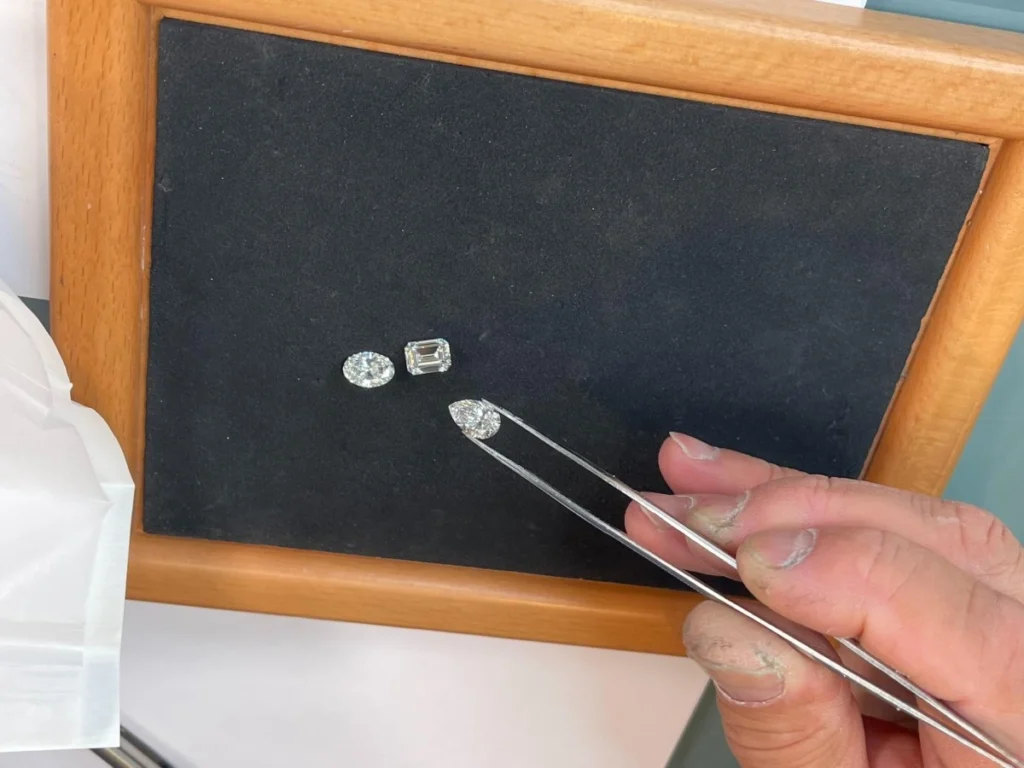
- Center stone selection is one of the slowest steps. Deciding between diamond, sapphire, emerald, or a lab-grown stone is your initial filter. Then you dive into carat weight, cut, color, and clarity. The Gemological Institute of America explains the importance of the diamond 4Cs—cut, colour, clarity, and carat weight when comparing stones.
- When you desire a stone with very particular characteristics, say, a 1.5 carat oval cut diamond with high color and excellent cut or an untreated teal sapphire within a specific size range, the jeweler might require additional days or even weeks to procure. Stones have to be located, shipped in, reviewed, and occasionally rejected until the right one surfaces. If you are choosing a diamond for your proposal, explore our selection of diamonds to compare available shapes, sizes, and quality considerations before making a final decision.
- Peace of mind is the request of many buyers, requesting conflict-free or lab-grown diamonds. If you’re after rare shapes or unusual colors, add additional buffer time at this point, as it tends to be the limiting factor for the entire project.
3. CAD Modeling
- Once the stone and rough concept are locked in, the jeweler designs a CAD (computer-aided design) model. This design phase typically lasts one to two weeks for designs with side stones, split shanks, or intricate galleries.
- You get digital renderings or a 3D view of the ring to check out from multiple angles. During this step, you confirm proportions, band width, prong style, and how any side stones or pavé lines sit next to the main stone.
- Revisions are typical. Minor tweaks, such as a few thinner prongs or a smoother profile, might contribute a couple of days. Larger transitions, such as switching from a halo to a three-stone arrangement, can reset the timer for this phase. Use this time to secure ring size, engraving, and any secret squirrels within the band, so last minute switches do not stall manufacturing.
4. Casting Process
- Once the CAD is approved, the ring goes into crafting and production, which typically takes 2 to 8 weeks depending on complexity. The initial step is casting the selected metal, whether it is yellow, white, or rose gold, or platinum.
- The design’s shape dictates the timing. A band with no stones and a simple setting can be cast and polished in a matter of a few business days. A ring with detailed filigree, custom patterns, or mixed metal elements needs more steps. These steps include wax or resin printing, mold making, casting, cooling, and careful removal of residue, with checks along the way.
- Expert goldsmiths or master artisans then polish the cast piece, filing, sanding, and prepping for stones. The workshop checks the casting for pits, cracks, or misalignment before proceeding. Identifying issues at this stage prevents rework down the line. If these issues are not caught early, they can add additional weeks to the schedule.
5. Final Setting
- Final setting, finishing, and quality control typically require 1 week. In this phase, your center stone and any side stones are hand set. Pavé, channel, or bezel settings all need different tools and time, particularly when stones are tiny or tightly packed.
- Once it’s been set, the ring is polished, cleaned, and inspected for security and symmetry. Everything from prong alignment, smooth edges, and engraving is verified here. If anything is off, the ring can go back to the bench for small fixes, which might add a few days but help prevent issues down the road.
- The final step is paperwork and shipment. Most jewelers will provide you with a gemstone or diamond grading report in addition to care and warranty information, sometimes offering lifetime cleaning or check-ups. Once it all passes final inspection, the ring is boxed up and shipped or picked up, hopefully still with a time buffer before the proposal date to account for shipping delays.
Why Start Early
An early start on a custom engagement ring keeps the entire experience cool, manageable, and transparent. It leaves room for design consultations, budget reviews, and minor modifications without pressure. This way, the ring is prepared far in advance of any holiday proposal deadline.
Holiday Deadlines
Most jewelers have hard holiday cutoffs for custom work, frequently in early November. They require 4 to 6 weeks for design, casting, stone setting, and quality checks. Almost all of my clients who are planning a late December or early January proposal now know to work on a 10 to 12-week window instead, so the ring gets not just made, but resized, engraved, and inspected in time.
Getting started in September or October puts you ahead of the rush, which comes in handy if you want a certain proposal date, like a New Year trip or family gathering. You can plan backward: if you hope to propose on 24 December, aim to have the finished ring in your hands by early December and begin the custom process no later than late September.
Those who wait till November discover that the custom slots are taken, so it’s either off-the-shelf rings or “semi-custom” with limited changes as the only option. Early planning alleviates that stress, so you don’t have to settle on a design you don’t quite love because the schedule is short.
Supply Bottlenecks
Custom rings rely on stone, metal, and bench time, all three of which are under strain during the holiday season. Diamonds within popular ranges, such as 1.0 to 1.5 carat round stones with mid-range colour and clarity, tend to go quick, as do sought-after shapes like oval and pear. Coloured stones, like sapphire and emerald, and metals, like 18k gold or platinum, can backorder when monster orders come in.
If you start in early fall, you typically have a wider selection of centre stones, side stones, and metal colors. You can compare two or three diamonds in your budget, see a variety of different sapphire hues, or consider platinum and 18k white gold before you make your decision. This prevents ‘take it or leave it’ decisions when your top selection is already taken.
Starting early provides some buffer for shipping delays and lab grading lines. If a stone must be shipped across borders or forwarded to a grading lab, those processes can add days or weeks. With more time, you don’t have to settle for last-minute replacements simply because a vendor cannot make a close-in date.
Revision Buffers
A custom ring often needs a few rounds of review, and a simple checklist keeps things on track: centre stone specs, side stones, metal type, ring size in millimetres, prong style, band width, and any engraving text. When you’re not racing against time, you can breathe your way through each of these and preview digital renders or wax models prior to signing off.
Additional time between drafts allows you to live with the design, request minor adjustments, and align the ring more intimately with your partner’s go-to look. For instance, you may initially opt for a high setting and then decide a lower profile is better for a hands-on type of worker or adjust the band width after trying samples on.
Most custom workshops quote 4 to 6 weeks for production alone. Small issues happen: a stone fails quality checks, a casting needs to be redone, an engraving must be corrected. Constructing a 10 to 12 week timeline, rather than crossing your fingers everything will run smoothly, prevents those bumps in the road from encroaching on your proposal date and provides peace of mind so you can turn your attention to other aspects of engagement and wedding planning.
Custom Design Versus Stock
Custom and stock engagement rings both signify a huge step in life, but they do it in very different manners. It typically boils down to how much control you want over the design, how quickly you need the ring, and how much you value a one-of-a-kind story.
| Feature | Custom Engagement Ring | Stock (Ready-Made) Ring |
|---|---|---|
| Design process | Built from scratch with sketches and CAD render | Pre-designed, chosen from existing styles |
| Personalization | Full control of stone, metal, setting, and details | Limited options, small changes only |
| Timeline | About 4–6 weeks, up to 8 for complex work | Often ships in days; sizing in 1–2 weeks |
| Price clarity | Final price set after design and estimate | Fixed, visible price before you buy |
| Cost | Can be cost-effective with careful choices | Wide range, but less control over where money goes |
| Heirloom stones | Can include family stones and special gems | Rarely designed to take heirloom stones |
| Returns | Often final sale once produced | Often 30-day return if unaltered |
| Sentimental value | Directly tied to your story and shared choices | Meaning comes more from the moment than the design |
Custom design means you can define every element of the ring to reflect your paramour and your narrative. You select the stone size and shape, the metal, the setting style, and secret details, such as an engraved date inside the band or a minuscule side stone in a birthstone hue. Others bring in heirloom stones from a mom or grandmother, then create a new design around the gem so the ring holds family history as well as fresh significance. Having this full control lets you tailor quality and design to a given budget, which can make a custom piece more affordable than the popular myth implies.
Stock rings are all about speed and ease. You see the completed ring, the cost is transparent immediately, and it can frequently ship within a few days. If the size is wrong, a quick resize may require a week or two. Many shops will provide a 30-day return window, so long as the ring is unmodified, which can feel safer if you’re not 100% certain about the style. The tradeoff is that design changes tend to be minor. You may trade out the center stone or metal, but the base style remains and you forfeit the opportunity to create a ring that reflects a deeply personal narrative from scratch.
Before your consultation, browse our collection of engagement rings to explore different setting styles and discover which design elements best reflect your partner’s taste.
Prepare for Design Consultations
- Budget range (with a hard maximum)
- Short list of priorities: stone size, quality, metal, design
- Accurate ring size in millimeters or standard ring size
- Style references: photos, links, or a small mood board
- Some jottings about day-to-day life and how the ring is going to be worn.
- Must‑have details: stones, engraving, matching wedding band plans
- Questions on timeline, resizing, warranty, and aftercare
- Copies of emails or a brief written summary for your records.
Budget Limits
Establish a ceiling before any sketches begin. That’s the center stone, side stones, metal, design labor, CAD work, any wax models or casting fees. This prevents you from falling in love with a design that’s not realistic for you and assists the designer in directing decisions from minute one.
Inquire about payments. Some studios require a 30 to 50 percent deposit, with the balance due on completion, while others have staged payments. If the budget is tight, focus on lab-grown diamonds instead of mined ones or recycled gold instead of premium-grade platinum. For instance, a 1.0 carat lab diamond is frequently less than a 0.7 carat mined diamond of the same grade, which leaves room in your budget for a more beautiful setting.
Rank what matters most: carat size, cut quality, color and clarity, or a special custom detail like a hand‑engraved band. Go in prepared for design consultations — say, “If we have to trim budget, trim the side stones, not the center,” so that trade-offs remain in your control. Always request a line‑by‑line quote in writing, with currency clear (for example, all EUR), including taxes, resizing, and upgrade policies, then save that with your contract.
Style Direction
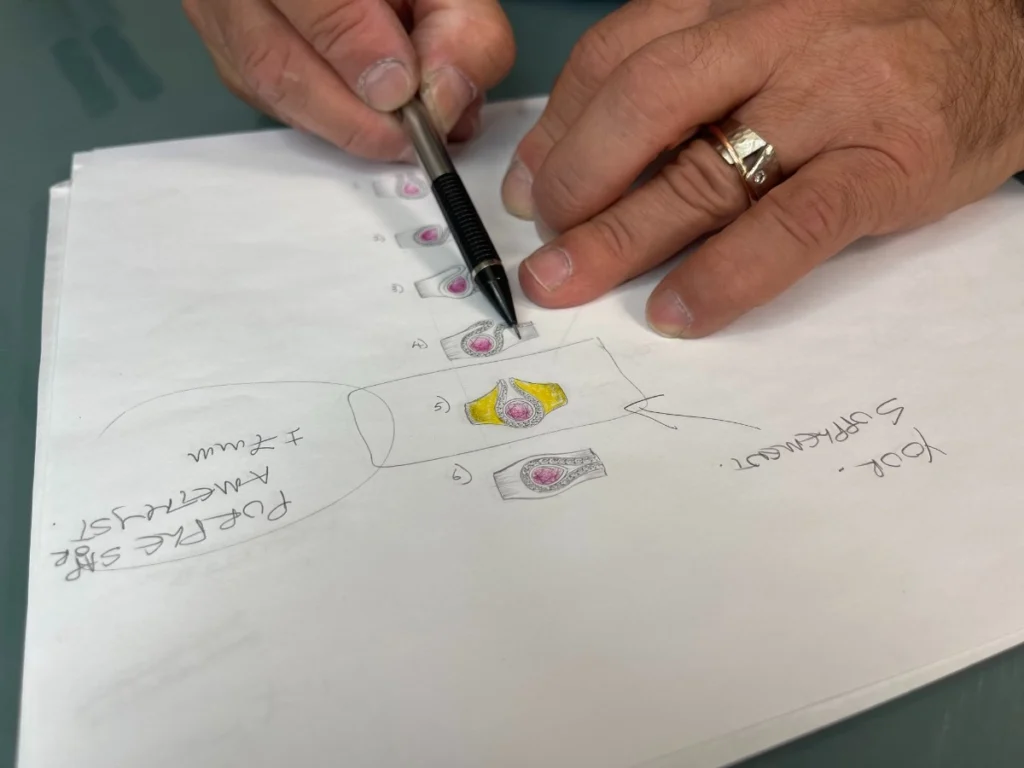
Come equipped with some style direction, even if it is vague. Notice if you gravitate toward solitaire, halo, three-stone, or vintage-inspired rings. Save two or three images on your phone or a mini-Pinterest board of what you like about each ring—perhaps the thin band on one, the oval stone on another, or the milgrain detail of a third. Designers don’t steal, but these show them a quick scan of your style.
Reviewing examples from our custom ring portfolio can help you identify design details such as band shape, setting style, stone arrangement, and metal color.
Consider the wearer’s lifestyle and what they already wear. If they work with their hands or play sports, a low profile bezel or semi-bezel might be safer than a tall prong setting. If their jewelry is simple and clean, a thin band with a single well-cut stone will fit better than a wide ornate band. Check their metal color. If most of their pieces are warm, rose or yellow gold in 14k or 18k might blend in. If they like cooler tones, white gold or platinum may work better with a colorless diamond or a sapphire.
Talk about personal touches that still make the ring practical. Perhaps a little birthstone tucked away inside the band, a secret engraving of a date or phrase, or a coordinating contour band you’ll add down the road. Request the designer to explain how these details will appear in CAD images or drawings and how they impact cleaning and long-term wear, so the ring appears unique but remains suitable for everyday use.
Finger Dimensions
Getting your finger sizes right reduces hold-ups and additional fees. Get sized by a jeweler who uses actual metal ring sizers and have them make a note of the size in whatever system they use, such as EU 52 or US 6. If that’s not an option, bring a trusty multi-size plastic ring gauge home, checking more than once during the day to ensure your finger isn’t swelling.
Now that’s comfort food, changing with the times. Fingers are slimmer in cold months and larger in warm weather and can fluctuate with weight shifts or pregnancy. For some, they like a tight fit that requires a little twist over the knuckle, and for others, they want a looser slide. Send this to the designer so they can recommend half or quarter sizes or include sizing beads or a comfort-fit inner curve if necessary.
Inquire in advance about resizing conditions. Some studios offer one complimentary resize within a specified window. Others bill by size change or metal. Get all of this, in addition to the agreed size and tolerance, in writing with the primary contract to prevent downstream disagreements.
Optimize Long-Term Ring Durability
Durability begins with intelligent design decisions prior to crafting a ring and continues with easy habits after it’s on the finger.
When selecting a gemstone for everyday wear, the Gemological Institute of America’s guide to gemstone durability explains why hardness, toughness, and stability all matter.
| Metal | Durability level | Key traits | Care notes / limits |
|---|---|---|---|
| Platinum | Very high | Dense, heavy, rare, holds stones well, wears to soft patina | Can scratch, but metal shifts instead of thinning |
| 14K gold | High | More alloy metals, strong, good daily wear, solid resale value | Needs simple cleaning; color stable in yellow/rose alloys |
| 18K gold | Medium | Higher pure gold content, richer color, softer than 14K | Shows scratches faster, prongs may need more upkeep |
| White gold | Medium–high | Hard base, bright white look when plated | Needs rhodium plating over time, which adds long‑term upkeep |
| Titanium | High | Very strong, light, resists corrosion and scratching | Hard to resize; some jewelers avoid complex repairs |
| Tungsten | Very high (brittle) | Very scratch‑resistant, keeps polish well | Can crack on hard impact; usually cannot be resized |
Metal choice impacts how well the ring stands up to everyday life. Platinum is perfect for those who desire a solid, timeless piece and don’t mind patina. Fourteen karat gold tends to be a good choice for most folks because the higher alloy mix makes it sturdy enough for daily wear yet still retains resale value. While white gold can look sharp and bright, its rhodium plating requires renewal and more visits to a jeweler. Titanium and tungsten require minimal daily maintenance; however, they are difficult or impossible to resize, which is important if finger size fluctuates over the years.
Safe settings defend center stones and side stones alike from chips and loss. They wrap metal around the stone edge, providing robust protection for softer gems or active lifestyles. Fine, well-constructed prong settings work as well, as long as the prongs are not too thin and are checked frequently, which is crucial around pavé bands where several small stones can loosen with impact. For those who work out, do labor, garden, or play sports, taking off the ring prior to those activities reduces potential damage from bent prongs, cracked pavé, or chipped stones.
Warranty and care information bridge the divide between design and reality. Requesting a written lifetime manufacturing warranty, as well as receiving clear care guidelines, establishes expectations from the outset. This might include how often to get prongs checked, which cleaners are safe, and which chemicals to avoid, such as strong cleaners or pool water that can erode alloys. Clear language comes in handy when thinking about future resizing or repairs, which are more complicated for titanium and tungsten than for platinum or gold.
Routine cleaning and inspections maintain the custom work looking sharp and secure. Professional cleaning once or twice a year, along with at-home soap and water rinsing, can clear away buildup that masks wear. At every visit, a jeweler can check prongs, bezels, and pavé rows, tightening any loose stones and identifying thin spots before they snap. Steer clear of strong chemicals and hard bumps in your daily activities. This consistent maintenance helps preserve brilliance and form for decades.
Plan Edmonton Bespoke Services
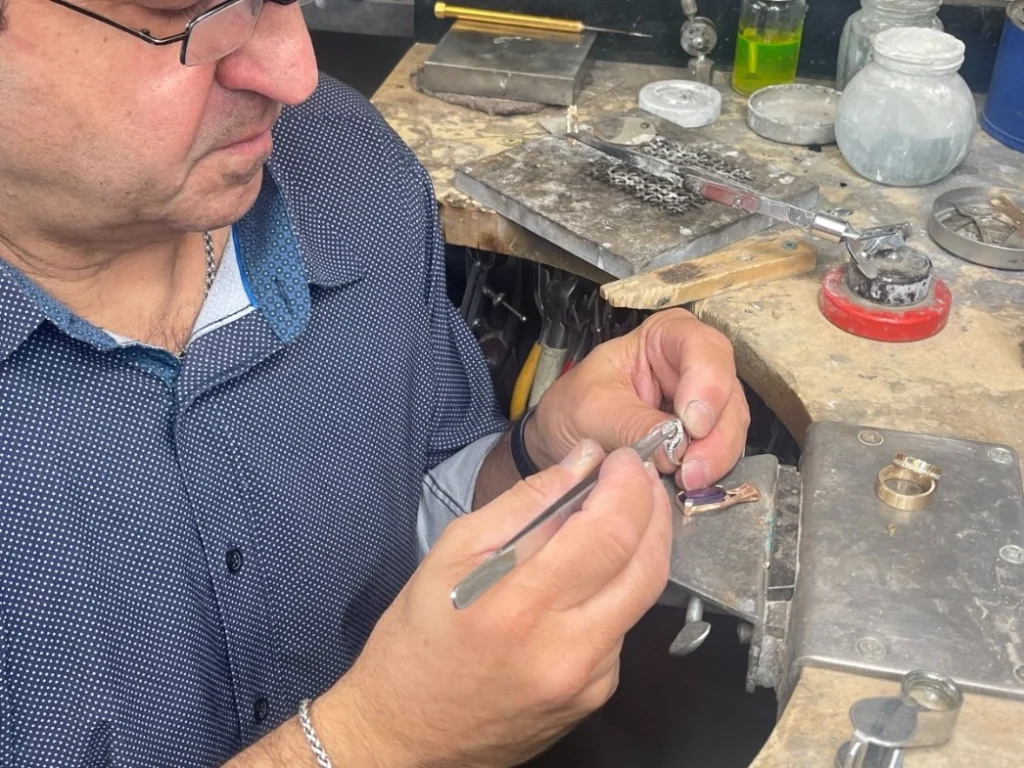
Plan Edmonton BESPOKE SERVICES provides you a direct route from initial concept to completed custom engagement ring with time allocated for meticulous design and hands-on bench work.
Scheduling a custom design consultation with Mark Katzeff Designer/Goldsmith Inc. In that meeting, you share basic details: preferred style, ring size, budget range, and any firm deadlines, such as a proposal during the December holidays. Feel free to bring sample photos or a sketch into your appointment, or even an heirloom ring you want to echo or reset. The Plan Edmonton team lays out how a bespoke service works in simple language, detailing how long it typically takes, which is around 7 weeks, and what you can do if you need it sooner. This is when you find out how the pricing is structured, so you understand what your possibilities really translate to within your budget.
You then collaborate with passionate engagement ring experts who lead you step-by-step from initial design to final shine. They assist you in translating loose concepts such as “clean and modern” or “vintage with tiny side stones” into a defined design agenda. The advantage of a goldsmith or designer is that they can demonstrate to you how the ring will sit on the hand, how high the stone will protrude and how the band thickness will wear in everyday use. Because the rings are handmade, you can request nuances like a secret diamond inside the band or a signature pattern on the shoulders and receive immediate input on how those nuances will endure over time.
Professional guidance spans gem, metal and design direction to fit both your personal style and budget. You could swap out the ethically sourced diamond for a sapphire or other colored stone, or even pearls if the wearer is more into a muted look and doesn’t mind the additional maintenance. Metals can be 100% recycled gold in various shades or sustainable platinum, describing how each wears in real life. The team can walk you through trade-offs, for example, choosing a slightly smaller center stone so you can invest in a thicker band for long-term strength. A lot of bespoke services provide a lifetime warranty, which assists with long-term peace of mind as you consider wear, resizing, or future repairs.
The early bird gets the ring! Prime the pump early if you want your bespoke engagement ring right for a certain date, a holiday proposal in particular. With a typical 7-week design and making window, plus time for any minor tweaks, the studio will propose a definite start date and completion goal. If you’re in a pinch, a few shops are able to compress that timeline to under 7 weeks, usually by cutting design rounds and freezing decisions more quickly. Early contact assists booking a workshop slot in busy seasons and provides additional lead time to source specific ethical stones or more uncommon gems. That way you don’t have to scramble huge decisions, and the ring is waiting in advance of your scheduled trip, celebration, or family gathering.
Conclusion
To sum it up, a custom engagement ring requires time and attention and definitive decisions. It can seem overwhelming at the outset, but each step has a straightforward objective. You establish a budget. You select a design direction. You select the stone and metal. You schedule the timeline so you’re not hurrying.
A custom ring can fit real life. Durable metal, secure settings, and brilliant stone choices keep it ready for decades of wear. Good notes, sharp photos, and straight talk with your jeweler keep the schedule on track.
To take the next step, compile your must-haves, pick a ring-ready date, and then schedule a design consultation with a reputable Edmonton jeweler to initiate the creation.
Frequently Asked Questions
How long does it take to create a custom engagement ring?
Most custom engagement rings require 4 to 8 weeks from design approval to finished ring. Complex designs, custom-cut stones, or busy seasons may stretch this. Begin early enough to allow for design changes, gem sourcing, and meticulous quality checks prior to your proposal date.
When should I start the custom engagement ring process?
Start at least 2 to 3 months before you want to propose. This allows for consultation, design iterations, stone sourcing, and manufacturing. By starting early, you’ll be less stressed, avoid rush fees, and be able to take your time and really make thoughtful decisions without pressure.
What is the difference between a custom ring and a stock ring?
A stock ring is a pre-designed ring you can purchase immediately. Your custom engagement ring will be designed around your style, lifestyle, and budget. Custom gives you more control over style, materials, and details. It takes more time and planning.
How can I prepare for a custom ring design consultation?
Come armed with inspiration photos, a firm budget and all you know about your sweetheart’s style and ring size. Choose metal color and stone shape. The better details you provide, the simpler it is for the designer to construct a ring that suits your ideal.
How do I make sure my custom ring is durable for everyday wear?
Opt for a durable metal, like platinum or 14k gold, and a protective setting, such as a bezel or protective prongs. Inquire about band thickness and stone hardness. Collaborate with a trusted jeweler who cares about everyday wear, correct engineering, and aftercare.
Are custom engagement rings more expensive than ready-made rings?
Not necessarily. Cost varies based on materials, design intricacy, and gemstones. A simple custom design can be comparable in cost to a stock ring. An experienced jeweler can advise you on maximizing beauty and resilience within budget.
What should I look for in an Edmonton bespoke engagement ring jeweler?
Search for a jeweler with great local reviews, in-house design and production, and transparent timelines. Request to view past custom work, credentials, and warranty information. Work with a trusted Edmonton custom specialist. We will walk you through every step and offer up-front pricing.