
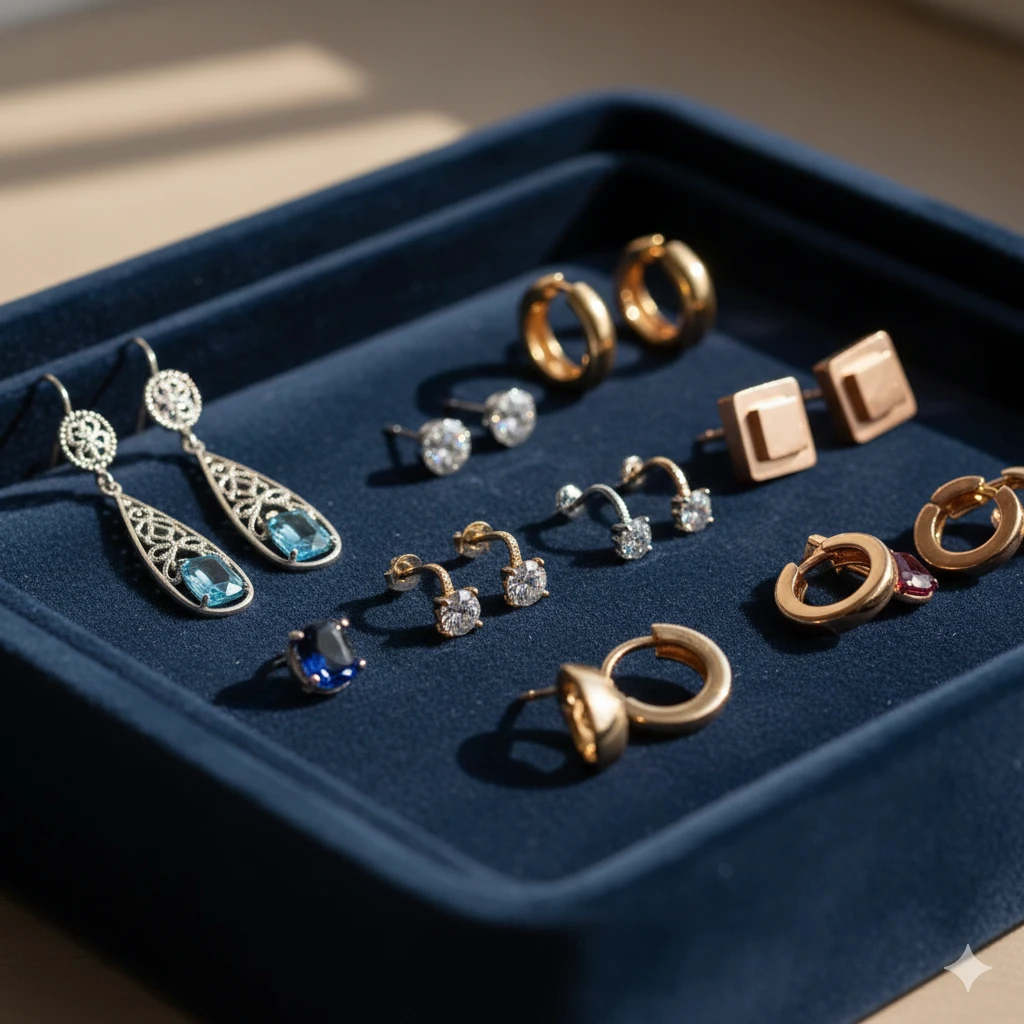
- Key Takeaways
- How to Select Your Perfect Pair
- Understand Earring Anatomy
- Prioritize Material and Comfort
- The Art of Ear Curation
- Beyond the Trend Cycle
- The Unspoken Language of Earrings
- Conclusion
- Frequently Asked Questions
- How do I choose the right earring style for my face shape?
- What should I know about earring anatomy before buying?
- Which earring materials are best for sensitive ears?
- How do I build an ear curation that looks cohesive?
- How can I pick earrings that stay stylish beyond trends?
- What comfort features should I look for in all-day wear?
- Do earrings send a message in professional or social settings?
Key Takeaways
- Start with your face shape and hairstyle. Determine earring length and width to achieve balance and focus. Try styles such as studs for round faces and teardrops for square faces to highlight features.
- Coordinate earrings with your everyday wardrobe and neckline. Go with small studs or huggies for high collars and drops or chandeliers for open necklines.
- Coordinate selections with your own style and lifestyle for maximum flexibility. Create a mini capsule of studs, hoops, and one statement pair to cover work, casual, and evenings.
- Focus first on comfort and materials for all-day wear. Pick hypoallergenic metals like titanium or surgical steel and weigh your earrings so you do not get irritated or stretched lobes.
- Know your fastenings for extra security and convenience. Stick with screw-back or lever-back for anything heavier and use butterfly backs for light, daily designs.
- Curate with intention, mix metals, and layer lengths without overcrowding your look. Balance your one bold piece with minimal accents to match and rotate the bold pieces with the seasons for freshness.
Choosing earrings style involves matching shape, size, and material to your face, hair, and everyday wear. Face shape guides the base. Oval suits most styles. Round pairs well with drops or long lines. Square softens with curves. Heart balances with teardrops. Hair length and texture change scale. Short hair suits studs and small hoops. Long or curly hair embraces bolder shapes and bright metal. Metal tone counts as well. Cool skin tends to go with silver or white gold. Warm skin goes with yellow or rose gold. For comfort, aim for lightness under five grams per ear. For a day at the office, select small studs. For nights on the town, go for chandeliers or ear cuffs. The following sections dissect each consideration with specific selections.
How to Select Your Perfect Pair
Begin with what fits your face, wardrobe, lifestyle, and temperament. A defined strategy eliminates guesswork and keeps your decisions grounded on a daily basis.
1. Face Shape
Discover your face shape by taking a few simple measurements. Measure the length of your face and width, then observe which is widest: your forehead, cheekbones, or jawline. Take it as a guide, not a law.
Round faces thrive on length. Pick drop, tassel, slim oval, or small vertical bar to direct the eye downward. Small hoops and studs work if they are angular or elongated.
Square or diamond shapes are softened with teardrops, curved dangles, and ovals. Try to curve harsh lines and introduce movement.
Long, oval, or oblong faces can use width. Chandelier, clustered drops, or bold statements help balance length. Heart shapes like teardrops, triangle drops, or medium hoops add volume around the jaw. Hoops in general are easy and fit most faces.
- Quick reference:
| Face shape | Go-to styles |
|---|---|
| Round | Drop, tassel, long bars, slim ovals |
| Oval | Medium hoops, studs, chandeliers |
| Heart | Teardrops, triangle drops, medium hoops |
| Square | Curved drops, teardrops, ovals |
| Diamond | Teardrops, soft dangles, medium hoops |
2. Hair & Neckline
Updos, buns, or ponytails frame the neck so use drop or chandelier styles to trace that line. Short hair can sustain chunk styles, wide hoops, or sculptural pieces that stand out.
High collars and turtle-necks require less volume near the face. Huggies, tiny studs, or close fit hoops keep it neat. For strapless and v-necklines, opt for big, bold statements or elegant drops to mimic the shape of the neck and chest. For long hair, smooth metal bars or shiny drops glide through strands and remain exposed.
3. Personal Style
For timeless style, carry pearls, bezel studs, and thin gold or silver hoops. These ground a work look and dress it up quickly.
If you lean modern or bold, experiment with ear cuffs, geometric drops, asymmetry, or mixed metals. Tassels, etched brass, and beaded arcs win in the bohemian-artistic camp. Build a range: simple metal for calm days and detailed textures and color for change.
4. Occasion & Vibe
Formal evenings demand diamond studs, fine pavé or sleek drop lines. Work and casual days go with small hoops or low-profile studs. Parties, first dates, or nights out beckon fringe, chunky resin or sculpted cuffs. Match material to dress code: precious metal for black tie, polished steel for business, and matte acrylic for casual.
Safety and comfort count. Some like latch backs or screw backs. Others covet feather weight and laid back hooks. A reliable ‘go-to’ pair streamlines the morning and defines your style.
5. Skin Undertone
Warm undertones look fantastic with yellow gold, bronze, or copper. Cool undertones go well with silver, platinum, or white gold. Neutral undertones can wear both with ease.
Use stones to flatter tone:
- Warm: citrine, amber, garnet, peridot
- Cool: sapphire, amethyst, emerald, aquamarine
- Neutral: pearls, diamond, moonstone, smoky quartz
Whether pearls, colored gems, or beads, they add the kind of soft light that flatters most skin. Keep one warm metal and one cool in your core set.
Understand Earring Anatomy
Earring 101 — Know the parts before you style. Earring Anatomy If you look at most earrings, there is a decorative front, a post or hook that goes through the piercing and a backing or clasp that secures it in place. Studs have a straight post, hoops have a curved wire or hinge, and many dangles hang from a hook. Materials matter too: gold, platinum, silver, titanium, and surgical stainless steel wear differently on skin and with weight. Sterilize posts with 70% isopropyl alcohol to kill germs and prevent infection.
The Styles
Studs lie flat to the lobe with a straightforward post and backing. They function for day to day use, from petite diamond or moissanite accents to flat discs. Hoops vary from small huggies and through hoops to large circles ranging from 30 to 70 mm in diameter, with thin tubes for lightness or solid metal for presence. Drop earrings dangle beneath the lobe, lending movement without the bulk of chandeliers. They are perfect for meetings, dinners, and travel when you want shine without heft.
Ear jackets add a front stud and a back piece that frames the lobe, handy for fast edge without fin. Threader earrings pull a delicate chain through the hole and you get to adjust the length to best balance your face shape and necklines. Industrial earrings and straight barbells connect two holes with one bar, prevalent along the upper ear; they require exact placement and diligent aftercare.
For occasions, chandelier earrings, sculptural cuffs, and designer statement pieces ground a look. Take a stab at one statement piece at a time, particularly when wearing high necklines or prints.
Build range: studs, small and mid hoops, cuffs for no-pierce styling, jackets for mix-and-match, and dangles for line and sway. Introduce conch-specific pieces: inner conch studs for a neat sitting, outer conch hoops that cuddle the edge to mix up location.
The Fastenings
Terfly (push) backs are fast, popular, and simple to swap out. Screw-backs twist onto the threaded post and resist loss, which is good for fine studs. Lever-backs snap shut on a hinge and are perfect for dangles and travel because they are unlikely to slip.
Know Your Earring Anatomy. If you work out, bike commute, or have stacked piercings, opt for lever-backs, latch-back hoops, or locking huggies to keep them in place. For helix or conch, flat-back labrets eliminate snagging under masks and hats.
Sensitive ears respond best to titanium, surgical steel, platinum, or 14K+ gold in light constructions. Sustain weight under about 4 to 6 grams per lobe for long wear, and purify often.
Heavy earrings go well with lever-backs, latch-back hoops, or wide discs for load distribution. Dainty hoops and studs are comfortable with push or flat backs. Size the post to your lobe thickness so it’s snug, not tight.
Prioritize Material and Comfort
Materials and fit establish the vibe for how earrings look, feel, and wear. Consider hypoallergenic metals, consistent weight, and clever construction so your ears do not scream after a long day.
Metal Choices
Sterling silver, gold, and platinum work for most wardrobes. They have luster, stand up to everyday wear, and go with both casual and dressy styles. If you want one pair to rock a lot, these are foolproof choices.
Titanium and stainless steel wear well. Titanium is light and hypoallergenic. Stainless steel is rugged and affordable, great for the gym, commutes, and travel. It fights scratches and maintains its form, so it is a firm pick if you are into sturdiness.
- Sterling silver (925) has medium durability, a cool white tone, and a low irritation risk if it is nickel-free.
- Gold (14k–18k) has high durability, comes in yellow, white, and rose tones, and has a low irritation risk in higher karats.
- Platinum: very high durability, gray-white tone, naturally hypoallergenic
- Titanium: very high durability, gray tone, fully hypoallergenic
- Stainless steel (316L/medical) offers high durability and a silver tone. It is often hypoallergenic if nickel-safe.
- Surgical steel: high durability, silver tone, designed for biocompatibility
If you’re sensitive to metals, stay away from nickel blends and uncoated copper. Follow labeled nickel-free items to minimize the risk of a flare-up.
Weight & Balance
Lightweight pieces avoid stretched lobes and pressure points. Acrylic, resin, thin-gauge metals, and tiny huggies all feel lightweight for all-day wear. Studs and easy hoops are the usual suspects when comfort trumps all.
About: Material and Comfort
Heavier or bold styles require substantial support. Think about material and comfort. Use larger clutch backs, screw backs, or lift-style supports to distribute weight. A discreetly positioned lever-back also aids, particularly with drop earrings.
Medium-weight earrings strike a nice balance. You maintain presence without traction. Prefer fabric and cozy.
Try before you buy. Put the earring in your hand. If it feels weighty in seconds, it might be too much for thin lobes or high piercings.
Hypoallergenic Options
Be on the lookout for hypoallergenic or nickel-free tags. This is important if your ears become itchy, red, or swollen after short use.
Medical-grade titanium, niobium, and surgical steel are reliable options. They are frequent in starter studs and long-wear pieces.
If metal backs bother you, switch out regular backs for silicone or plastic discs.
Materials and brands to try:
- Titanium, niobium, platinum, surgical steel (316L)
- Brands known for sensitive ears include Blomdahl, Tini Lux, and Medical Plastic lines.
The Art of Ear Curation
 The art of ear curation. It mixes studs, hoops, drops and cuffs to express style and mood. The practice is old, with status in Ancient Egypt and coming-of-age rituals in many Native American cultures, but it’s modern in our mashup of shapes, metals, and textures. No hard and fast rules. No matter if you have one piercing or several, you can still look ‘put together’. Wipe clean pieces with a soft cloth to keep shine, and store sets on holders or trays so you can try out combos you like.
Mixing Metals
Mixing metals adds dimension and keeps your style fresh. Gold hoops alongside a thin silver stud feel new. A steel ear cuff can connect warm and cool tones, with no new piercing required. This is helpful when your necklace is gold, your watch is stainless steel, and you want the ear to tie it all together.
Miss mixed metal sets to connect the rest of your jewelry. A gold drop on the lobe with a silver huggie above it draws in both tones from a ring stack. Matte and high-shine finishes aid in breaking up the look so it reads balanced, not loud.
Popular metal pairings for quick styling:
- Yellow gold + sterling silver: classic contrast
- Rose gold + silver: soft meets crisp
- Yellow gold + blackened steel: bold edge
- Silver + titanium: cool, sleek
| Base Metal | Accent Metal | Vibe | Notes |
|---|---|---|---|
| Yellow gold | Silver | Modern classic | Works with watches in steel |
| Rose gold | Yellow gold | Warm blend | Softens sharp shapes |
| Silver | Blackened steel | Urban | Great with cuffs |
Layering Lengths
Pile short and long dangles to construct flow. A 10 to 15 millimeter mini drop near the lobe, then a 40 to 60 millimeter long drop below, contributes a tier that frames the jaw.
Mini hoops with mid-length drops add dimension without the bulk. Experiment with a tiny hinged hoop in the first, then a delicate chain drop at your second. Trim the length to fit your piercings and how aggressive you want the vibe to read.
Ideas by occasion:
- Work: small hoops and micro studs and short bar drop
- Evenings: crystal huggie + chain threader + ear cuff
- Weekends: chunky hoop, tiny dome stud, slim oval drop
- Formal: Pearl stud, fine diamond drop, smooth cuff
Balancing Pieces
Balance a statement earring with minimal studs or thin huggies in upper piercings. This maintains concentration and prevents visual noise. Ear cuffs provide a sleek curve without fresh piercings and help complete the circle.
Scale to your face. Round faces are better suited by longer, narrow drops. Angular faces tend to go great with soft hoops. Heart-shaped faces respond well to weight near the lobe, such as teardrops. Balance other jewelry light when earrings are big. Think fine chain, no heavy bracelet.
Restrict wow areas. If earrings are statement, keep the neckline bare and bypass the additional bobby pins. Utilize trays or earring cards as you plan sets the night before. It moves you along faster and makes you more consistent.
Beyond the Trend Cycle
Trends ebb and flow and 2026 is witnessing a strong shift to minimalist looks, even no jewelry. Designers are debuting bare lobes, built-in collars in place of necklaces and faux fur trims and accents as focal points down runways. Style still craves choices. Constructing intelligent earrings that go with silent apparel and large statements keeps an individual protected.
Timeless Investments
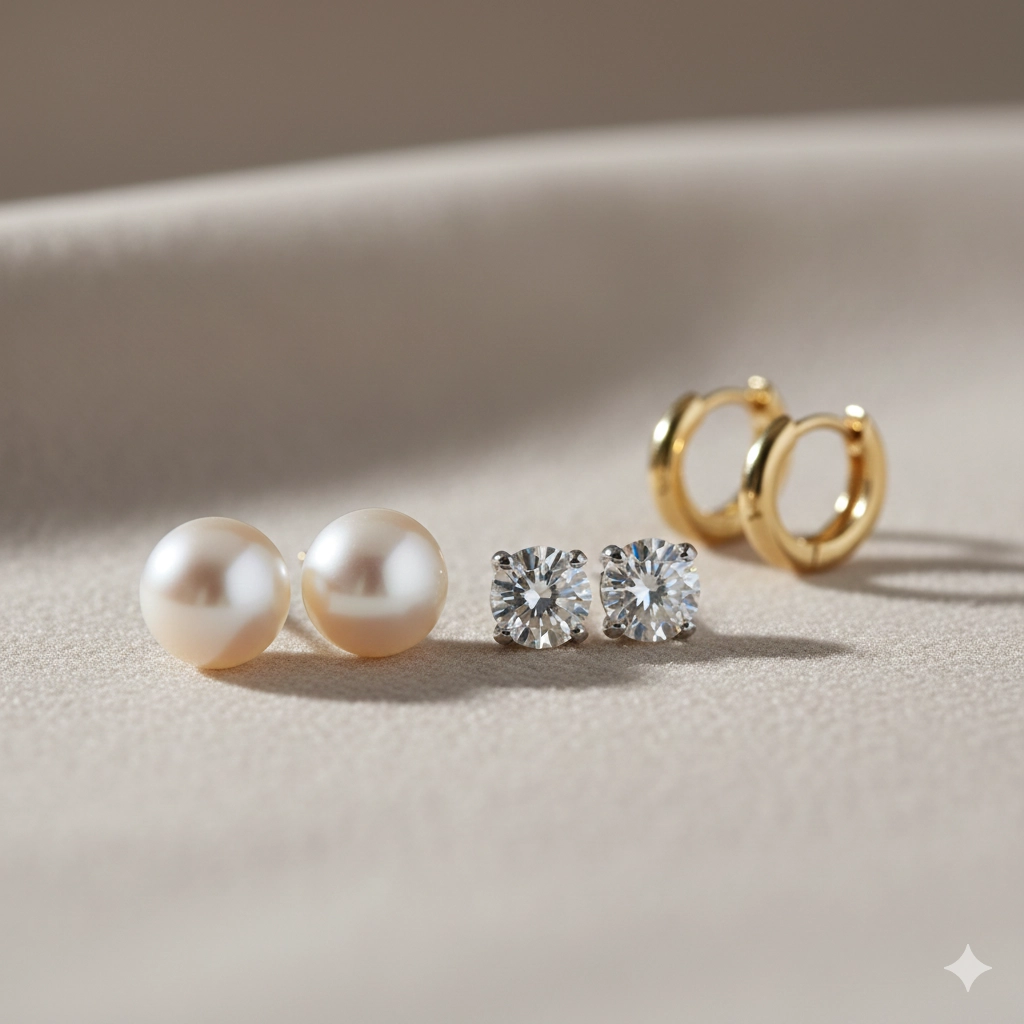
A pair of classic studs and hoops do 99% of the work. Diamond studs, lab-grown or natural, nestle near the ear and complement button-downs, tees, and eveningwear. Pearl studs, freshwater or cultured Akoya, soften the edges and add a tranquil finishing touch. Simple gold hoops in 10 to 14k, thin and super small diameter (10 to 20 mm), seem neat and clean in a no-necklace phase and won’t clash with sewn-on beaded collars.
Elegant drops in plain metal, a minimalist bar or tiny bezel-set stone bridge day to night when you forego a necklace. A sleek huggie in silver, steel or gold wears contemporary to pared-down ensembles and layers beautifully if you’re pierced up. In a season skewing toward jewelry at a minimum, one polished form comes across as deliberate, not bare.
- Diamond studs (round or princess, 0.10–0.50 ct total)
- Pearl studs (6–8 mm, white or golden)
- Small gold hoops (10–20 mm, 10–14k yellow/white/rose)
- Huggies in silver or gold (hinged, 2–4 mm width)
- Simple metal drops (bar, teardrop, or bezel-set)
- Black onyx or moissanite studs to keep it clean and graphic.
Must-haves retain their worth when materials and construction are rugged. Search for secure friction or screw backs, smooth solder joints, and metal purity hallmarks. Select hypoallergenic posts in titanium or surgical steel if your skin is sensitive.
Seasonal Adaptability
By Color elevates warm months. Switch in gemstone studs—peridot, blue topaz, citrine—or glass enamel for spring and summer. Tassel or threader earrings give you lightness of movement and look great with linen, open collars, and bare necks.
Colder months beg for scale. Chunky hoops, bold cuffs, or sculptural resin resonate with coats and knitwear. Statement shapes stand on their own when you forego necklaces or sport built-in beads.
Weigh and match for comfort. Go light in heat: hollow hoops, aluminum, threads. In cold, opt for weightier metals, carved horn or wood to offset layers.
Set a rotation you can scan fast:
- Spring/Summer: light hoops, gemstone studs, threaders.
- Fall: textured hoops, matte metal cuffs.
- Winter: bold drops, resin or wood, pearl clusters.
The Unspoken Language of Earrings
 Earrings communicate in shape, size, color and material. They highlight the face, direct attention, and establish your vibe pre-utterance. A tiny shift, such as a stud versus a drop or cool metal versus warm stone, can read confident, soft, bold or calm.
Let your earrings speak for your confidence, mood, and personality! Pearl studs indicate effortlessness and elegance. They come across as understated and sophisticated. Bold hoops exude energy and confident style. Angular pieces, such as triangles and squares, feel modern and sharp, while soft curves, like ovals and teardrops, imply warmth. Materials add context: matte metals feel understated, high-shine finishes feel festive, and natural stones read grounded. Earrings mean more in some cultures. Jade in Chinese culture is valued for protection, wisdom, and good fortune. Gold in certain African cultures connects to royalty and spiritual power.
Choose shapely earrings or bold statement pieces to catch eyes and start conversations. Oversized geometric drops can emphasize the jawline. Sculptural cuffs direct attention to the contours of the ear. Statement pieces say you’re open to attention and conversation. If you want a gentler pull, opt for medium drops in clean lines—teardrops, skinny bars, or knife edge hoops. Color talks too. Red, representing luck and happiness in China, comes off vibrant and celebratory. Black feels sleek, white feels pure, and green signals calm or growth. Mix high-contrast colors to make a statement or tone-on-tone to blend in.
Coordinate your earring selections to what you want to say—flirtatious, businesslike, whimsical, classy. For work, rely on small to mid-size studs, huggies or short drops in silver or gold. They appear clean and don’t distract on calls. For romance, gentle motion and warm metals assist—pearl drops, rose gold hoops, or delicate chains. For fun, experiment with color-block resin, mismatched pairs, or charms. For dress-up occasions, pearls or streamlined stones in skinny bands speak sophistication quickly.
Understand the silent tongue of an earring. Shape can balance face shape. Long drops lengthen round faces. Wide hoops can add width to narrow faces. Angular studs sharpen soft features. Curved forms soften strong jawlines. History shows signals. In 18th-century Europe, a heart earring tilted left or right hinted at marital status. Today, design still signals identity. Pearls represent elegance while statement designs represent edginess. Culture adds layers, too, with superstitions about luck, protection, and status.
Conclusion
To pull it all together, select earrings that match your day, face shape and vibe. Small hoops enhance an office look. Studs keep a gym plan easy. Long drops add clean lines for a night out. Test posts and backs for a tight fit. Opt for hypoallergenic metal if your ears turn red. Mix sizes and shapes to create a cool stack. Balance color with skin tone and hair. Pick one statement piece, then keep everything else light.
To create range, begin with one gold tone and one silver. Include a pearl stud and a mid hoop of 20 to 25 mm. Exchange styles with mood or agenda. To take one step further, organize your existing pairs, mark empty spaces, then select one upgrade for this week.
Frequently Asked Questions
How do I choose the right earring style for my face shape?
Pair balance to your features. Round faces favor angular drops. Soft hoops or curves complement square faces. Heart-shaped faces radiate with teardrops. Oval faces can wear most styles. Play with different lengths to discover what complements your jawline and cheekbones.
What should I know about earring anatomy before buying?
Know the parts: post or hook, backing, setting, and dangle or hoop. Secure backings cut down on loss. Smooth posts and quality closures increase comfort. Knowing the materials that go into each component prevents irritation and increases longevity.
Which earring materials are best for sensitive ears?
Choose hypoallergenic metals. Think titanium, niobium, surgical stainless steel, or 14k to 18k gold. Platinum is great but expensive. Stay away from nickel and unlabeled alloys. If you’re not sure, begin with a medical-grade titanium and try it out for brief intervals.
How do I build an ear curation that looks cohesive?
Start with a theme: metal color, minimal or bold, or a motif. Anchor with a stud or small hoop. Layer sizes from lobe to helix. Maintain even spacing. Mix textures, such as polished and matte, and add one focal piece for interest.
How can I pick earrings that stay stylish beyond trends?
Focus on timeless shapes: studs, small hoops, huggies, and simple drops. Opt for top-notch metals and timeless stones such as pearl or clear crystal. Neutral finishes in gold or silver coordinate with most outfits. Focus on comfort and versatility, not novelty.
What comfort features should I look for in all-day wear?
Look for lightweight designs with smooth posts and secure flat backings. Select balanced pieces that don’t tug the lobe. Consider silicone or screw backs for staying power. Look for skin-safe metals to avoid irritation!
Do earrings send a message in professional or social settings?
Yes. Minimal studs or small hoops come across as polished and dependable. Bold geometric pieces indicate creativity. Pearls say classic. Style to occasion and culture. When in doubt, go with elegant, subtle jewelry that matches your attire.
Searching for more? Mark Katzeff provides exceptional custom jewelry pieces that stand out from the rest. You may find these resources helpful:
Looking for more inspiration? Explore these sites for more information
Historical Context on Jewelry Styles