
- Key Takeaways
- Why Insure Your Jewellery?
- The Goldsmith’s Role in Jewellery Insurance Claims
- Navigating Different Claim Scenarios
- The Intricacies of Replacement
- Beyond Monetary Value
- Common Pitfalls to Avoid
- Conclusion
- Frequently Asked Questions
- How does jewellery insurance work for high-value pieces?
- Why is a goldsmith’s report important in a jewellery insurance claim?
- What documentation should I keep to support a jewellery insurance claim?
- Can I choose my own jeweler or goldsmith for a replacement?
- How is the replacement value of my jewellery calculated?
- What are common reasons jewellery insurance claims get rejected?
- How can I avoid underinsuring my jewellery?
Key Takeaways
- Jewellery insurance protects what your typical home policy can’t, particularly when it comes to irreplaceable or valuable jewellery like engagement rings, watches, and heirlooms. Consider a dedicated jewellery policy if your collection’s overall value exceeds your home policy limits.
- Precise, recent appraisals and good documentation are the cornerstone of an effortless jewellery insurance claim. Maintain comprehensive records, including photos, descriptions, receipts, and valuation certificates, and review them periodically as prices fluctuate.
- An experienced goldsmith can serve as an appraiser, advocate, and artist during the claims process. Depend on their expertise to evaluate damage or loss, liaise with insurers, and repair or rebuild pieces while maintaining both monetary worth and design fidelity.
- Whether it’s loss, theft, accidental damage or heirloom pieces, you’ll need specific steps and proof. Report incidents immediately, heed insurer directions scrupulously, and collaborate with artisans who can customize repair or replacement options to your need.
- Replacement can mean tricky things like gemstone matching, metal work recreation and design integrity. Select expert professionals that can strike a balance between insurer standards and your individual tastes so the new item is just as much the same in quality and sentiment.
- Jewellery insurance isn’t just about money. It’s about safeguarding memories, family legacies, and emotional investment. Think ahead with adequate coverage, upkeep, and record-keeping so that when the unforeseen occurs, you can revive not only the piece itself but its place in your life.
Jewellery insurance claims are formal requests to an insurer for payment or repair when covered jewelry is lost, stolen, or damaged. Most of our customers file jewellery insurance claims after a break-in, loss while traveling, or dropping it at home. Jewellery insurance claims depend on proof of ownership, recent appraisals, clear photos, and police reports in the event of theft. Policy terms are important too, like coverage limits, deductibles, and how value is determined, whether agreed value or actual cash value. To minimize holdups or disagreements, policyholders feel they require neat documentation and a general understanding of claim procedures. In the following sections, the guide details how jewellery insurance claims typically function and what can influence an equitable outcome.
Why Insure Your Jewellery?
Jewellery insurance is about protecting not only the money you spent but the sentiment behind every piece when things go amiss.
One main reason people insure jewellery is simple: loss happens a lot. A ring slips off in a restroom. A necklace clasp snaps on a crowded boulevard. Your watch is left behind in a hotel room and disappears upon your return. Typical home insurance tends to not respond well in these cases, particularly for ‘mysterious disappearance’, which is how jewellery often gets lost. Dedicated jewellery cover can come in for theft, loss and accidental damage, so you are not footing the bill to replace a $4,000 ring.
Most home insurance policies limit coverage for jewellery, watches and furs to around $6,000 all together, and that is pre-deductible. That limit can be eaten up by one nice engagement ring, leaving the rest of your pieces uninsured. By adding scheduled jewellery to your home policy or taking a stand-alone jewellery policy, you can increase those limits and obtain item-by-item coverage. This type of coverage generally runs about 1.5% to 2% of the appraised value per year, so insuring a $5,000 ring might cost $75 to $100 a year.
A definitive claim path counts. When the unexpected occurs, such as a break-in, a cracked gem, or a bracelet left behind on a trip, quality jewellery insurance seeks quick repair, replacement, or cash settlement. A lot of insurers deal with local or approved jewellers so you can match the quality and style you had previously. This can be particularly important if you own diamond jewellery, which has a tendency to appreciate over time. Regular appraisals keep sums insured aligned with market prices.
Jewellery tends to go everywhere you do, whether it’s a quick trip to the office or an international flight. Insurance that follows you out of the house means a lost ring on vacation is a claim, not a total loss.
The Goldsmith’s Role in Jewellery Insurance Claims
A goldsmith is at the heart of most jewellery insurance claims. Their role is to provide transparent information on value, damage, and how a piece can be repaired or replaced so the insurer and policyholder are operating from the same reality.
1. The Appraisal
It usually begins with an appraisal, either pre-loss for coverage or post-loss for valuation. A goldsmith examines every item, verifies the metal type and karat, records the weight, and grades gemstones where possible. For instance, a ring is written up as 18k yellow gold, 5.2 g, with a 1.00 ct round diamond of a specific clarity and color. That degree of specificity grounds both the sum insured and any subsequent claim.
The goldsmith subsequently provides a valuation certificate that insurance companies can depend on. It will typically have clear shots from multiple perspectives, written descriptions, and the current market value in one currency.
Because metal and gemstone prices fluctuate, appraisals need to be refreshed every few years so cover doesn’t lag the actual market. The goldsmith compares gold price per gram, typical diamond price lists and standard demand, and then modifies values.
Insurers typically have guidelines about what an appraisal should provide. A good goldsmith knows these standards and writes reports that meet them, which eliminates back and forth later and expedites both policy renewal and claim settlement.
2. The Documentation
When the claim is filed, the goldsmith helps pull all papers into one clean file. This usually entails pairing purchase receipts, lab certificates, and previous imagery with a new evaluation of the scratched or lost item.
They create an itemized list of all insured pieces. Each line lists metal, karat, weight in grams, stone information, and an agreed value. This list functions like an inventory and minimizes arguments as to what really was insured.
Organized records really matter at claim time! A goldsmith who keeps digital versions of appraisals and pictures can forward them quickly when the insurer requests, rather than attempting to reconstruct the record from scratch.
Once the package is complete, a few goldsmiths fire it off directly to the insurer or loss adjuster. This neat bundle typically expedites the review stage and may prevent diminished settlements from lack of evidence.
3. The Advocate
Most clients don’t speak the insurance adjuster’s language, and the goldsmith does. They can act as an impartial specialist and describe the way a piece was constructed and why a particular replacement cost is reasonable given today’s materials and labor sourcing.
If policy wording is fuzzy, the goldsmith can identify what qualifies as “like for like.” For example, a handmade platinum bracelet with custom engraving is not comparable to a mass-produced 14k bracelet, even if the weight is similar. That transparency backs up a more precise claim value.
Goldsmiths occasionally speak directly with the insurer’s technical team. They can dispute low estimates, detail why a repair weakens a setting or demonstrate that a full remake is safer and longer lasting. Their familiarity with realistic workshop costs can keep the client from being pressured toward cheap fixes.
They assist clients in comprehending responsibilities like proving ownership and handling salvaged components. By demystifying rights and responsibilities in clear language, they take the stress out of claims and help them proceed without unnecessary friction.
4. The Artisan
Once a claim is authorized, the goldsmith transitions from evaluator to creator. They might fix a bent ring shank, reconstruct broken claws, or completely recreate a lost pendant from old pictures and descriptions. In most cases, the very same individual who appraised the piece repairs it.
Matching originals is a part of this. The goldsmith obtains the same metal type and karat, tries to match as closely as possible the stone color and clarity, and duplicates small design details such as milgrain edges or hand engraving. The idea is to maintain both quality and appearance as close as possible so the owner experiences the same connection to the new piece.
Insurers, for example, might let an “equal” replacement rather than an exact duplicate. The goldsmith helps the client pick options that fit both the policy terms and their taste. For example, changing from a fragile pavé setting to a sturdier bezel while keeping the same overall value and style.
They can provide redesign options, particularly for heirloom claims. A shattered antique brooch could transform into a trio of earrings and a necklace, all on claim dollar, while respecting the original stones and narrative.
Understanding the factors that influence diamond quality can help you make informed replacement decisions, so it’s worth reviewing our diamond education guide before selecting a replacement stone.
Navigating Different Claim Scenarios
Jewellery insurance claims hinge on the exact event: loss, theft, damage, or a complete disappearance with no hope of recovery. It changes if you’re claiming for one ring or a whole collection, and when cover sits under a homeowners policy with a low cap (usually around USD 1,500) versus a stand-alone jewellery policy. Whatever the claim, it pays to understand your cover, your deductible, and how much you might pay out of pocket – both now and later through premium hikes.
Lost or Stolen
For loss or theft, insurers anticipate immediate care. Report to local police and get a written report or case number. Many countries, including India, refer to the initial record as a ‘first information report’ or equivalent, and insurers will accept any formal incident record that verifies time, location, and basic details.
Then construct evidence of what’s absent. Submit descriptions, good photos, appraisals, purchase receipts, and grading reports. Claims typically address common scenarios, like a ring that falls off while water skiing, in a public washroom when handwashing, or even a necklace lost from checked baggage.
Insurers then compare your documents with the policy terms to set the settlement: repair (if found but damaged), replacement through approved jewellers, or a cash payout. One patron who lost an engagement ring in the surf was paid under a homeowners policy purchased two months earlier, but her claim was diminished by the deductible and the policy’s jewellery limit. She had higher premiums for a number of years. Most policies observe increases of approximately 30 percent for five years following a large jewellery claim.
Damaged Pieces
Typically, once damage claims come in, a qualified jeweller does a close inspection, examining stones, settings, and metal for cracks, chips, or bent parts, and then prices the repair or full replacement. Damage is more prevalent than manufacturing defects and can be caused by everyday wear and tear, banging against hard surfaces, or exposure to harsh chemicals.
Pre- and post-incident photos, combined with a written specialist report, give the insurer a clear account of the item’s state and cause of the damage. Depending on that, the insurer could authorize repairs through a preferred jeweler, seek multiple quotes, or settle a replacement piece of comparable type and quality. The ultimate payout will generally be the authorized repair or replacement cost minus the deductible, so it pays to see if the work cost is sufficiently high to warrant a claim, particularly if potential claims can increase premiums moving forward.
Heirloom Items
If heirlooms are involved, claims require more context and detail than stock pieces.
- Evidence of age, origin or maker includes old receipts, family records, and hallmarks.
- Expert appraisal that covers market value, materials, and rarity.
- High-resolution photos from multiple angles and detail shots of specific characteristics.
- Notes on any past repairs, redesigns, or stone replacements.
- Explicit policy language on the handling of antiques or unique items.
Where restoration or recreation preserves as much of the original design and material as possible while satisfying contemporary safety and wear requirements. Several insurers will deal with specialist workshops that know the antique settings and old cutting styles, so any new work remains close to the original craftsmanship.
Comprehensive documentation bolsters a claim amount that is commensurate with the prevailing market and the piece’s exceptional characteristics. Where a genuine like-for-like replacement isn’t possible, it’s all about a fair cash settlement and a thoughtful restoration plan so the historical and family significance of the jewellery is maintained instead of reduced to metal and stone valuations.
The Intricacies of Replacement
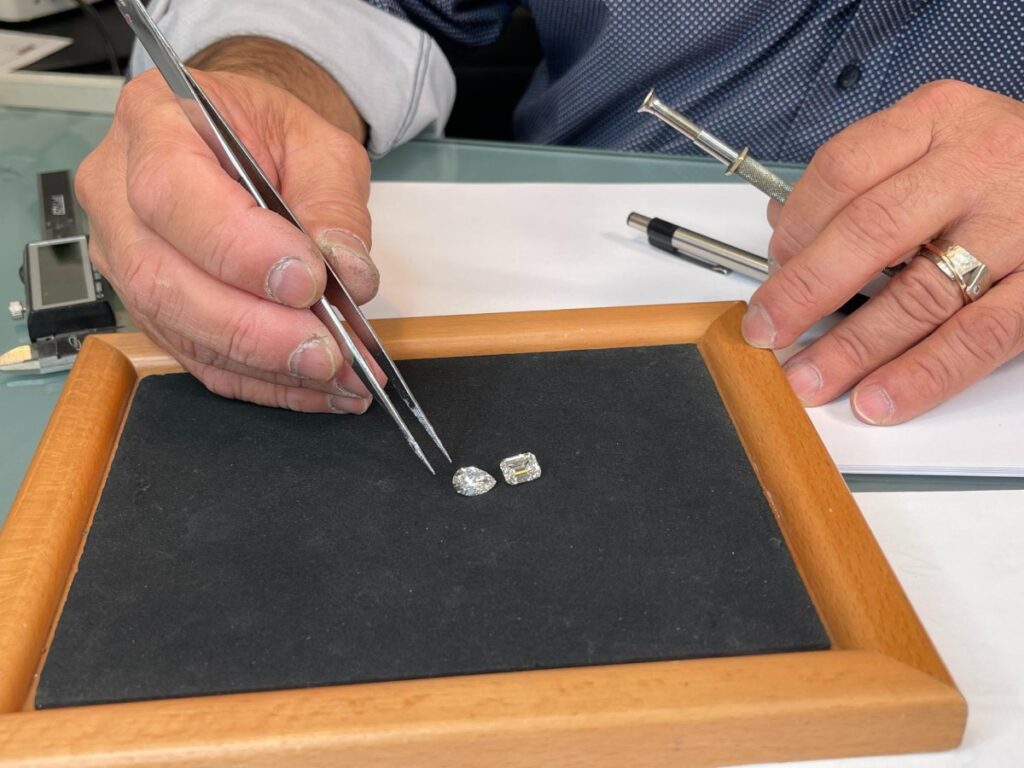
Replacement in jewellery insurance claims is reconstructing actual things from forms, recall, and documentation. It’s not just price; it’s how close the new piece can come to the old one in appearance, in touch, and in symbolism.
Gemstone Matching
- Verify loss information and coverage, gather any previous appraisals, photos, receipts, and grading reports.
- Record the full stone data: type, shape, cut style, carat weight, measurements in millimeters, color grade, clarity, cut quality, and any treatments.
- Pay attention to setting style and design (i.e. halo pendant, stud earrings, three-stone ring) to observe how stones interact with metal and light.
- Get any remaining stones or matchy-matchy pieces (the other earring survived) checked by a reputable gemologist and they recommend realistic replacements.
- Source candidate stones from reliable vendors and verify against sample specs with narrow color and size margins.
- Use lab reports whenever possible to confirm identity, quality, and treatments, particularly for diamonds and top-value colored stones.
- Draft something for the insurer: “Engagement ring, 14kt, 5 g, 0.50 ct diamond, SI1, G–H” or “pair diamond studs, total 0.80 ct, VS2, H–I,” etc.
- Show side-by-side photos, grading tables or simple charts to the client and insurer so all see how close the match before setting.
A clear description is vital for all types. For earrings and pendants, the file should list style, metal karat, and gemstones with number, size, and quality. For a chain, it might read, “Gold chain, 10kt, 55 cm, box link, 6 g.” This degree of specificity prevents arguments and accelerates signoff, which typically allows the replacement to proceed within 2 to 3 business days.
Metalwork Recreation
Recreating metalwork starts by locking down the exact specs: metal type, karat, alloy color, length, style, and weight. For instance, a missing chain could be described as ‘Gold chain, 10kt, 55 cm, box link, 6 g,’ whereas a bracelet or watch would have brand, model number, and material. This provides the insurer with a definitive standard and provides the goldsmith with a definitive mandate. Without it, you’re quick to slide into a “similar but not equal” piece that might violate policy guidelines.
Bench jewellers replicate the original design as precisely as possible. They’ve matched the karat and alloy mix so that color, hardness, and wear over time remain consistent with what the owner had previously. Intricate details, such as fine engravings, milgrain edges, or lace-like filigree, might require a combination of hand work, laser engraving, and casting, inspired by old photographs or scans of a surviving wedding band or pendant from a set. These decisions are important for longevity as much as aesthetics because the replacement item requires the same robustness at its seams, talons, and spines as the original.
Insurers and clients alike want evidence that the replacement is not a downgrade. While most workshops provide before and after image sets or sample pieces to demonstrate that polish level, engraving depth and profile heights all align. This visual documentation, combined with a fresh weight and karat report, facilitates claim settlement and provides the owner with something tangible if value is ever challenged down the line.
Design Integrity
Design integrity isn’t just about materials. It’s about maintaining the integrity of the first form, equilibrium and personality. That can translate to maintaining the same band width on a ring, the same pendant height on the chest or the same cluster pattern on a pair of earrings so they sit and move as prior. When a policy permits an “equivalent” instead of “identical” replacement, these specifics help drive what still feels right.
Since lots of pieces hold strong memories, claim handlers and jewellers typically discuss design priorities with the owner. Some individuals obsess over brand and model number on a watch. Others are far more concerned with an engraving inside a 14kt wedding band than the precise gem grade. Those negotiations frame trade-offs when budgets or market supply constrain the ideal fit.
To be safe, most workshops hand sketch or CAD image the proposed design and show it to the client and insurer before casting. This comes in handy particularly when reconstructing custom work or blending new stones with old from a salvaged setting. That common visual roadmap minimizes shocks and aligns budgets and feelings.
When the replacement is done, the final write-up should read as clearly as the original: style, metal karat, weight, stone details, and any brand or model data all recorded. This assists in establishing ownership and worth for future claims and transforms a complicated, occasionally fraught process into a recorded, repeatable one.
Beyond Monetary Value
Jewellery insurance claims talk invoices and appraisals, but the true worth of so many pieces lives in memory, identity, and family history. Policy limits and market prices are relevant, but they do not entirely capture what is at risk when a ring, watch, or pendant is lost or damaged.
Sentimental Worth
Engagement rings, wedding bands, and heirloom pieces often mark turning points in a life: a promise, a marriage, a graduation, a first major success. To certain individuals, these are absolutely priceless. The emotional value dwarfs whatever the price of the metal or stone might be. A plain gold band might mean more in the story of a long marriage than any expensive diamond ring.
In the event of a claim, information such as when the work was gifted, by whom, and on what occasion can help determine whether to restore or replace. These stories help set priorities: keeping a similar design, using the same type of gemstone, or preserving an engraving. When the original can’t be rescued, a lot of clients would rather have a fresh piece with the soul than a higher-priced one without the personal connection.
Insurers, jewellers and clients fare best when they capture this emotional background. Notes on family history, old photos, and even sketches can steer the craftsman’s labor, so the replacement maintains a genuine connection to the past rather than just feeling like any old thing.
Emotional Impact
Loss, theft or sudden damage can feel like losing a piece of someone’s past, not just a device. That emotional hit might be fiercer when the piece was a family heirloom or an antique with tales handed down over generations.
A transparent, tranquil claims process alleviates this anxiety. Plain spoken answers, pragmatic deadlines, and candid status reports prevent clients from ever feeling in the dark. Experienced jewellers can demonstrate what they intend to restore or remake, which usually comforts clients that their memories aren’t being dealt with like a commodity.
Expertise counts here. Knowing how stone cuts, metal work, and engravings can be matched or adapted is how experts are able to say with confidence what can be salvaged and how close the end result will be to the original.
Future Heirlooms
Replacement jewellery doesn’t have to be a lesser or cheap imitation. Most prefer to consider a new ring, watch, or pendant a chapter beginning, a future heirloom destined to acquire its own tales and history. Collectors who appreciate luxury goods tend to think like this already; they value the pleasure and significance of wearing a piece as much as any secondhand price tag.
Fine workmanship is at the heart of this thought. Well-crafted pieces in timeless metals and firmly set stones are heirlooms for generations, even as the price of gold, platinum, or diamonds fluctuates on the open market. The material’s beauty and rarity still hold, as does the artistry that went into design and handwork.
Great advice following a statement that goes beyond design. It should contain updated appraisals in a uniform currency, sufficient insurance for today’s market, and easy maintenance tips so the new shard doesn’t encounter the same danger once more. Worn in, overwhelming the wearer’s everyday family events and other personal milestones, a new invaluable patina transcends any status or investment argument.
Common Pitfalls to Avoid
Jewellery insurance claims frequently don’t pay out, not because of bad faith, but because of gaps, delay, or unclear evidence. Good habits established early eliminate most of that danger.
A straightforward checklist keeps you clear of the most common pitfalls. Maintain receipts, sub-5-year-old appraisals, multi-angle photos, and any grading reports all in one folder (digital and paper). Log where you keep each article and when you wear it. Record policy numbers and your insurer’s claim phone number and email together. Log every claim call, including the date, time, and who you spoke with. This type of organization may seem rudimentary, but it will frequently be the deciding factor between an easy claim and weeks of back and forth.
Claim delays usually begin with slow or ambiguous reporting. Most policies stipulate that you must report loss or theft ‘at the earliest opportunity.’ Petty theft, such as a ring gone missing post-party, can remain undetected for months. Therefore, frequent jewellery box and safe inspections count. If it’s gone, notify the police and your insurer immediately, even if you still have some hope it will show up. TIP: Send photos, appraisals, and any serial numbers with your first report to accelerate the adjuster’s work.
Generic replacements are another pain. Other insurers pressure you to accept a partner jeweller with a generic piece that isn’t as good as your original in quality, design, or even emotional value. Before you sign a policy, ask how replacement works in detail: cash payout versus store credit, freedom to choose your own jeweller, what happens if an exact match is not possible, and how they treat custom or inherited pieces.
Policy wording is what catches most people by surprise. Others insure jewellery just when it is on your person or in a safe, which is not very realistic for day-to-day living. Home policies can cap jewellery at around CAD 1,400 to 2,800 unless you schedule items by name, so a high-value watch or engagement ring could be under-insured. Avoid common pitfalls by requesting specific questions and receiving specific written answers regarding limits, deductibles, coverage for damage versus loss versus theft, and whether a jewellery claim can push up rates on your other policies. Since values shift, re-value important items every 2 to 3 years, revise sums insured, and provide fresh appraisals to your insurer.
Conclusion
In short, jewellery insurance claims don’t have to be a labyrinth. With a sound policy, unambiguous records, and a reliable goldsmith, you’re on firm footing. Loss, theft or damage still stings, but you eliminate the risk of money shock and extended battles with your insurer.
Real assistance resides in the little steps. Reshoot photos. Store receipts together in a single secure location. Request full reports and updates from your jeweler. Read your policy at least annually. Little things today can rescue a lot of angst on a sucky day.
Got a key piece at home that you’d miss a ton! Spend ten minutes today. Make sure that your cover, proof, and appraisals align with what that piece means to you.
Frequently Asked Questions
How does jewellery insurance work for high-value pieces?
It covers loss, theft, or damage on an agreed value or replacement value basis. An independent valuation from a qualified goldsmith or appraiser is typically needed. For a claim, the insurer might provide repair, replacement, or a cash settlement as per your policy.
Why is a goldsmith’s report important in a jewellery insurance claim?
A goldsmith’s report verifies the piece’s quality, craftsmanship, and state prior to loss or damage. These specialist papers are what insurers turn to confirm value and authenticity. This minimizes disagreements, accelerates claims, and assists you in obtaining a reasonable and precise settlement or replacement.
What documentation should I keep to support a jewellery insurance claim?
Keep receipts, valuations, gem grading reports, photos, and certificates. Update valuations often, particularly for gold and diamond pieces. Store digital copies safely. Well documented, it supports your claim and assists your insurer and goldsmith in determining suitable replacement and repair options.
Can I choose my own jeweler or goldsmith for a replacement?
Mostly yes, but it is policy dependent. Certain insurers opt for approved jewellers, while others permit you to select your own goldsmith. Check this prior to a claim. A trusted specialist can help match design, quality and materials as close as possible.
How is the replacement value of my jewellery calculated?
Typically, replacement value utilizes the current market costs, workmanship, and gemstone quality. A certified goldsmith or appraiser calculates materials, design intricacy, and labor. Routine revaluations are critical because metal and gemstone prices fluctuate.
What are common reasons jewellery insurance claims get rejected?
Claims are often declined because of underinsurance, old valuations, missing documentation, unclear ownership or breach of policy conditions. Not reporting loss promptly or taking reasonable care can cause problems. By reading your policy and keeping records up to date, you minimize these dangers.
How can I avoid underinsuring my jewellery?
Schedule each important item individually with a current valuation from a professional. Check your coverage every one to three years or when prices change dramatically. Make sure your amount insured is for full replacement cost and not just the purchase price. This helps prevent short payouts when claims are made.